Wake Up Dead Man: A Knives Out Mystery

There is a new Knives Out film from Rian Johnson. Before it hits streaming, Netflix has decided to give it a short theatrical run. This seems to be a new thing Netflix is doing. They did it with Frankenstein and now they are doing it with Wake Up Dead Man. I have to say it’s a smart move, especially when they have a movie with enough name recognition to bring people into the theater.

The big question is whether the story is actually cinema worthy. That’s what you need to know to decide if this is a movie worth paying for full theater prices when it’ll be on Netflix soon. So let’s get into that.

You can read the review below or watch the video review on YouTube:

First things first, I should mention for Knives Out fans. This film follows the established pattern of the franchise by giving us a completely new mystery, a completely new cast of characters, and a completely new setting. The only returning character is Benoit Blanc, which stays true to the anthology structure that Rian Johnson has built for this series.

Wake Up Dead Man: A Knives Out Mystery brings Benoit Blanc to a small parish where Monsignor Wicks has been murdered. The most obvious suspect is the junior Monsignor, Father Jud, who recently joined the parish. The problem is the way the murder was committed makes it almost impossible for the murder to have happened at all. Every clue and every piece of the crime scene raises more questions than answers.

Benoit arrives in town and immediately gets to work on the case. He interviews every lively, aggravating, charming, and suspicious parishioner, trying to pin down whether divine intervention was involved or whether someone pulled off an incredibly tricky murder. The film lays out a tight web of connections, motives, spiritual dilemmas, personal struggles, and small-town secrets. It is a smart setup with a lot of ins and outs, and it creates a surprisingly interesting mystery.

One thing that Knives Out fans will appreciate is that this film does something very different with its setting. The franchise usually leans into wealth satire and dysfunctional family dynamics, but this film brings all of its tension into a religious community, which allows it to cut so much more deeply across multiple sections of society. It gives the story an intimate, morally complicated playground, which becomes a fresh and unexpected space for Benoit Blanc’s investigation.

First Impressions

I love a good mystery. I love a great whodunit. I love clues. I grew up on Agatha Christie so I am always a bit of a sucker for these kinds of films. I have not loved every Knives Out movie. Sometimes the films get a little too precious or a little too repetitive for me, but I think my biggest problem with the last film was that it always looked like James Bond was playing a detective, but this time it’s all Benoit Blanc!

There were so many moments in this film when I thought I knew exactly who the murderer was. Then something would twist. Then I thought I knew again. Then the story would turn again. Sometimes my guess stayed the same and sometimes it changed, although in the back of my mind I had a feeling I knew where things were going. Even with that, the story kept pulling together enough twists to stay interesting while also giving the characters room to breathe.

For fans of the franchise, this film stays faithful to Johnson’s traditional structure. There is a midpoint twist that reshapes your understanding of what you saw, followed by a series of reveals that keep reframing the truth until the very end. This is exactly the kind of storytelling Knives Out fans expect and the film delivers it cleanly, but perhaps not always in ways you expect.

Cast: The Key Characters

In true Knives Out style, the characters all feel like real people, even though they obviously represent specific character types within the film. A few are likable, a few are definitely not, and that balance works.

Daniel Craig does a great job bringing back Benoit Blanc. I really enjoyed his smooth style and that wonderfully quirky accent. It felt like he was having fun again. Maybe it was the subject matter, because the religious angle of the film reveals a little more of Benoit as a person, instead of only leaning on him as the master detective. Whatever the reason, it worked.

He brings out a clever and compassionate version of Benoit, mixed with a wry sense of humor that lands perfectly, especially during his monologues. There is one moment at the end that stands out as a highlight, because the spotlight is literally on him as he pulls the mystery together while tapping into the emotional undercurrent set in motion by Father Jud. It’s one of those signature Rian Johnson scenes with Benoit at the center of the story, orchestrating the whirlwind of clues as everything locks into place.

Then there’s Father Jud, played by Josh O’Connor. He feels like a priest who has lived a hard life. He carries a difficult past and still found peace with God. There are a couple of scenes where he channels something deeply authentic and spiritual and it gives the character weight. The movie is not highly religious even though it takes place almost entirely on church grounds. What it does well is show the difference between faith as a structure and faith as a lived experience. Father Jud represents the positive side of that struggle and O’Connor does a beautiful job walking the line between humility and suspicion.

Father Jud also represents the moral center of the story. If Knives Out was about old money privilege and Glass Onion was about tech billionaires and performative activism, then Wake Up Dead Man looks inward at the nature of our human souls. It shows how good people get corrupted and controlled, and how the bitter desire for wealth can take root even in the most sacred spaces. Father Jud becomes Johnson’s quiet reminder that maybe there is hope for us yet, which gives the film a deeper emotional dimension.

Monsignor Wicks is played by Josh Brolin, who really is in everything right now, but he is such a good character actor that he pulls it off. He is the older, burnt-out priest whose life has taken a hard turn and who keeps going because he has nothing else. You feel like you have seen men like this, exhausted and hardened by the weight they carry. His dynamic with the younger Monsignor is one of the strongest relationships in the film.

Cast: The Parishioners

Then there are the parishioners. Every character is looking for truth, faith, hope or redemption. Every one of them is vulnerable to the story Monsignor Wicks has been telling. Father Jud challenges that story and his presence cracks open the corruption, the dependency, and the illusions holding everyone together. That is what sets the murder in motion and what gives the film its emotional spine.

Kerry Washington plays Vera, the attorney, who is both sympathetic and infuriating, while her adopted son Cy, played by Daryl McCormack, leans into his role of failed politician and wannabe YouTube influencer in constant search of a viral moment. It’s a classic indictment of modern self-promotion that fits perfectly with Rian Johnson’s wit.

Filling out the cast is the alcoholic doctor played by Jeremy Renner, the jaded science fiction writer played by Andrew Scott, and the suffering musician played by Cailee Spaeny. Finishing off the core cast is the rock of the parish, Martha Delacroix, played by Glenn Close. It’s a cast of A-listers who aren’t just here to collect a paycheck.

They bring together so many comedic and absurd moments that explore the darker side of human nature and the corruption of holy spaces. Still, the film never loses its sense of playfulness, with the characters embracing their sharp edges while also revealing just enough of their soft, tender honesty. That is what makes the story feel a bit more tangible and morally grounded than the other films.
The Mystery and The Puzzle

The setting is intimate and pastoral without any cinematic spectacle to dazzle us and fill in for storytelling. As a result, the mystery stands on its own. The film works because it engages your mind, making you think creatively as you try to solve the puzzle alongside Benoit. What I appreciated the most about the film is that while the structure is formulaic for a mystery, it knows that the audience is smart and that they’ve probably got a good sense of who the real killer is at an early point in the film. So, it knowingly switches things up, landing you in places that you may have expected, but the way you got there may not have been the way you anticipated.

The mystery itself is a two-part puzzle. The first part sets up the impossible murder and keeps that question alive for almost the entire film. The second part is the key that unlocks the first, and the way Benoit gathers clues, uncovers hidden motives, and pieces things together feels earned in all the right moments even when some of them feel like givens within the story. There are also themes within the story that come directly from Father Jud’s spiritual choices and the way he approaches the truth, which gives the final solution a deeper, more dramatic breakthrough rather than a razzle dazzle reveal at the end.

Recommendation

So, is Wake Up Dead Man worth a theater ticket or should you wait for Netflix?

I paid full price for my ticket, I have Netflix, and I liked the first film and disliked the second film. So, I went into this film hoping that it wasn’t going to be a waste of my time and money, and when I stepped outside into the cold night, I felt good. I felt lighter than when I entered the theater, and that is my #1 tell for if a film is worth the price of a ticket or not. Wake Up Dead Man is not the best mystery I have ever seen, but it resonated with our world today and our search for something meaningful in the absurdity that is modern life.

However, if you want to wait for it on streaming, I think it’s also worth the price of your Netflix subscription for the month. It was a great film for friends and family, and I think it’d probably be a nice date night film as well because it gives you something to talk about after the movie ends.

If you like murder mysteries, enjoy a little comedy mixed with drama, and love the feeling of solving a puzzle right before the characters solve it, I think you’ll enjoy this film. It entertained me, and that was exactly what I needed.

If you want nonstop action, car chases, explosions, or a surprise ending that knocks you flat, this is not that movie. This one might not be the film for you.

Final Thoughts

So, Wake Up Dead Man … have you seen it? Are you planning to see it in the theater or on streaming? How do you feel about this new distribution format that Netflix is trying out? I think the theater window is a little too short, but I love the option of going to the theater if I want to see the movie in that setting. Honestly, because I didn’t like the second film, I don’t think I would have watched this one on Netflix, but the fact that it was playing at the local theater that is two blocks from my house got me out on a day when I really needed a break. So, I’d love to hear your thoughts on this.

If you enjoyed this review, please give it a like and subscribe for more. You can also visit my YouTube channel at @ErinUnderwood for more videos.

***

If you’d like to watch the original KNIVES OUT film, you can use my Amazon Associate links:

Posted in Uncategorized | Tagged , , , , , , , , | Leave a comment

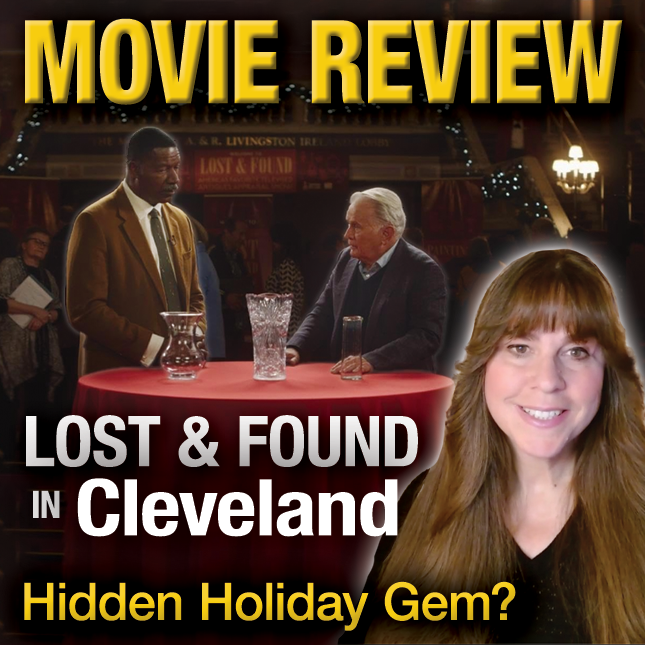
Lost & Found in Cleveland, Review: A Surprising New Holiday Film?

Holiday movies are their own little tradition for me, and they start earlier than you think. In fact, they’ve already started and some of them are already here like Lost and Found in Cleveland. This may not sound like a holiday film, but it definitely is a great “holiday” bridge film for watching between Thanksgiving and Christmas.

When it comes to holiday films, some of them end up surprising you in good ways, and some just blend into the background like holiday noise. You never really know what you’re going to get until you watch. So, let’s figure out if this new comedy Lost and Found in Cleveland is an “antique” in the making or if it’s just another cheap holiday knockoff.

You can read the review below or watch the video review on YouTube:

Based on a fictionalized version of The Antiques Roadshow, the movie kicks off with the country’s most popular antiques show “Lost and Found,” coming to Cleveland, Ohio during the Christmas season. We get a look at the behind-the-scenes drama of the show as well as a peek into the lives of a few hopeful antique owners who decide to bring their treasures in for an appraisal, hoping for a big score. The film weaves together several story lines from characters who don’t know each other, but they all intersect in surprising ways at the show. It’s a film structure that we’ve seen before (so nothing new there), but they bring it all together in a warm and fuzzy way at the end.

First Impressions
From the moment it begins, Lost & Found in Cleveland has the air of light holiday warmth that is actually perfect for streaming. If you’re able to just sit back with a mug of hot chocolate and popcorn, it delivers on that cozy vibe. As someone who enjoys quirky antiques (if you have watched any of my review videos you know what I mean), I found that angle especially appealing because there are some really … unique … people in the antiques world.

The film doesn’t shy away from the odd stories and personalities in the antiques community, and it enjoys a meandering build toward the live broadcast of the appraisals without any high-stakes action. So, no car chases or exploding buildings. Instead, the narrative structure is predictable but that’s part of the charm. While you know exactly what you’re getting with Lost and Found in Cleveland, at least it tries to deliver on its promise in unexpected ways. However, some of the conflicts feel a bit overplayed from time to time, but it’s the cast that makes it fun because everyone in the movie feels like a good fit for the story. There are moments of comedy and drama that nail the somewhat goofy antics within the story, making some of the odd moments feel intentionally designed to still deliver a holiday movie that is extremely family-friendly and unobtrusive.

Cast & Characters
Lost and Found in Cleveland features a huge ensemble cast that looks like a bunch of people getting together to make a fun film with their best friends. The cast list is long but some of the highlights are Martin Sheen, Dennis Haysbert, June Squibb, Liza Weil, Jon Lovitz, and so many other recognizable faces in big and small parts.

What works is that every character has a distinct thread and a story that makes sense. In other words, every character has a purpose, which is something you don’t always see with an ensemble cast. The mother and son story line has emotional weight that is softly funny and charming, though it borders on becoming melodramatic. Another thread focuses on the struggles of a wife whose husband is suffering from dementia as his confusion pulls him back into memories of his time in the war. There is also a very Karen-like socialite mother who brings in some sharp, comic relief with her snark. We also have a young married white couple, where the professor husband is freaking out about the boxes of Aunt Jemima memorabilia he inherited from his mother. Finally, there is the mailman with a dream. He is kind and wonderful, and he is the best thing about the film other than Martin Sheen, who appears in only a few scenes yet brings a sense of seriousness that keeps the movie from slipping into forgettable holiday fare.

Holiday Setting
So, nothing that I have said feels very holiday-like. That’s because the story isn’t centered on the Christmas holiday, it just takes place in December. You see some Christmas trees. There’s some holiday cheer and decorations. It’s even snowing in the film, which adds to the holiday season feel. These things are all there, but if you are not a holiday person, you won’t feel like you just got hit over the head with a Christmas tree when you sit down with your family to watch it.

Recommendation
So is Lost and Found in Cleveland ticket-worthy or not? I need to take myself out of this equation because this film was clearly mad for me.

But is it for you? I think this film will absolutely find a core audience of people who enjoy quirky films with an independent feel. It’s also, like I said, a safe film for a family and friends outing that will give you a laugh or two while you spend time together. It’s also a great inter-generational film for viewing with your parents, grandparents, and kids.

For my crew of holiday film lovers, this is honestly better than most of the sappy Hallmark holiday films that come out every year, and it doesn’t feel like every other holiday movie that you have ever seen. So, there are some benefits for sure!

However, if none of this sounds interesting to you, this isn’t your film. You should just move along and find something else to watch because you’re not going to be satisfied with this cutesy holiday antiques film.

Final Thoughts
So, Lost & Found in Cleveland, have you seen it? Are antiques something you enjoy? What about holiday films? Or does shoveling 10 feet of snow during a blizzard sound like a better use of your time? I definitely want to know because not every film is for every person, but I’ll admit that I enjoyed this one as the kickoff to my holiday movie season.

If you enjoyed this review, please give it a like and subscribe for more. You can also visit my YouTube channel at @ErinUnderwood for more videos.

***

Regarding my Amazon Associate links:

PERSONAL NOTE: One of the things that I like doing is sharing Amazon links in case you want to go buy a video or read a book related to the review that I posted. It’s the kind of thing that I like doing, which is why I thought it might be a nice idea to provide this kind of information for you.

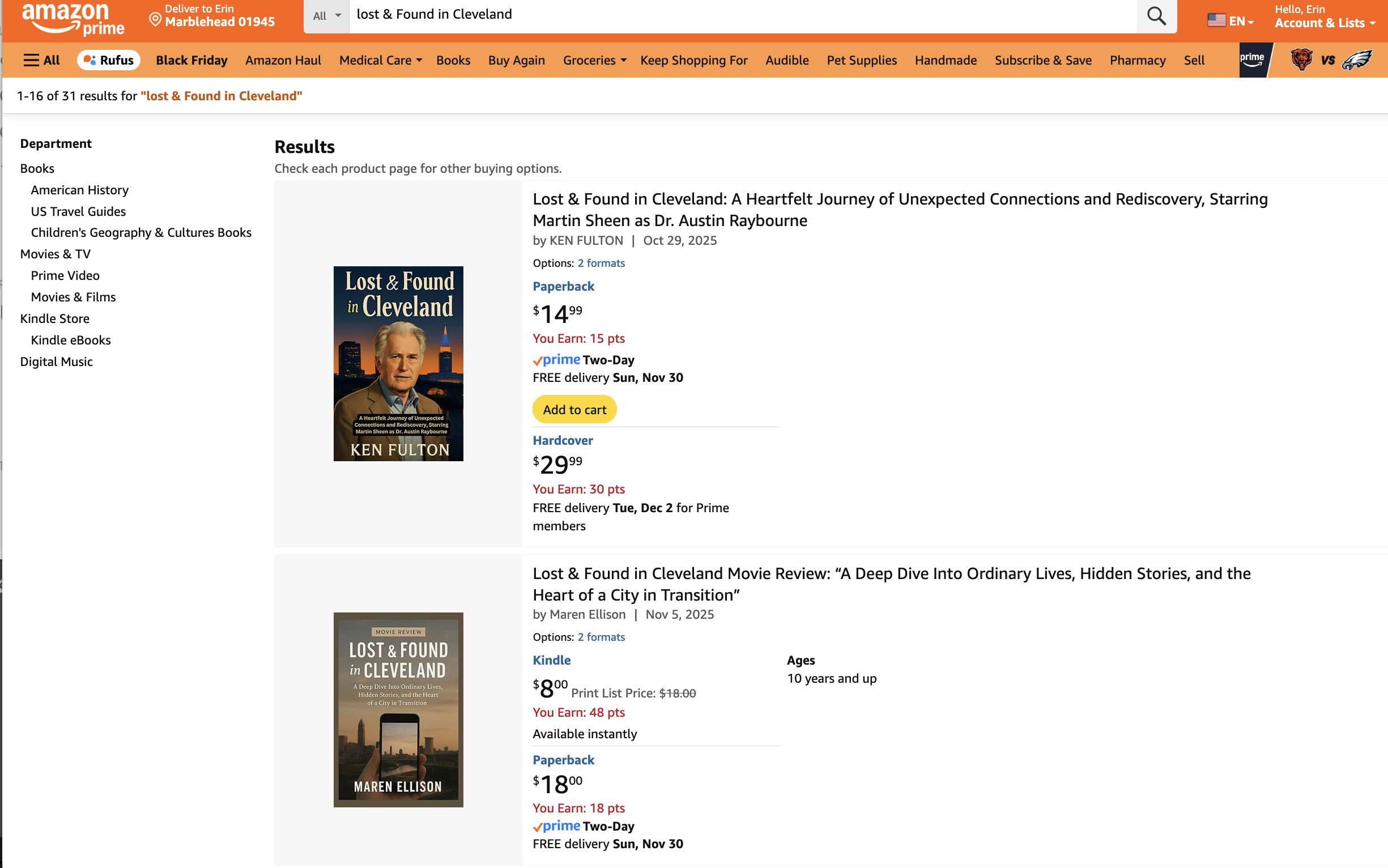
Today, when I went to Amazon to see if there was a streaming or DVD link for Lost & Found in Cleveland I saw TWO, not one but TWO, books and I had to pause for a moment. I knew there wasn’t a book associated with this film. So, I took a closer look and these two books are REVIEWS!!! of this film being sold in paperback and hardcover. The covers don’t use the movie poster, but one of them does use Martin Sheen’s face. I can’t even imagine how this is possible!

I looked at the length of the “reviews” and they are both hundreds of pages to make it look like a book. Since the first few pages of the text was available, I looked at that as well and the first thing that I noticed was that the front matter had all kinds of weird legalese text that you never seen in a normal book. Then, I read the 4 pages of text in the introduction, and it’s painfully obvious that while the writing is grammatically correct, it’s likely AI generated with very little human editing. It also reuses the same words and phrases multiple times, it fails to add actual examples of anything, and it makes lots of broad/universal statements that are generally empty of meaning.

Please be careful when buying books like this online. If you want to read AI generated content, just go to ChatGPT type in a prompt and read its commentary for free. Don’t pay anyone $8.00-20.00 for something like this. It’s just awful and won’t help you.

Sorry for the rant. I just had to get that off my chest. 🙂

Posted in Movie Reviews, Movies, Reviews, Uncategorized, YouTube | Tagged , , , | Leave a comment

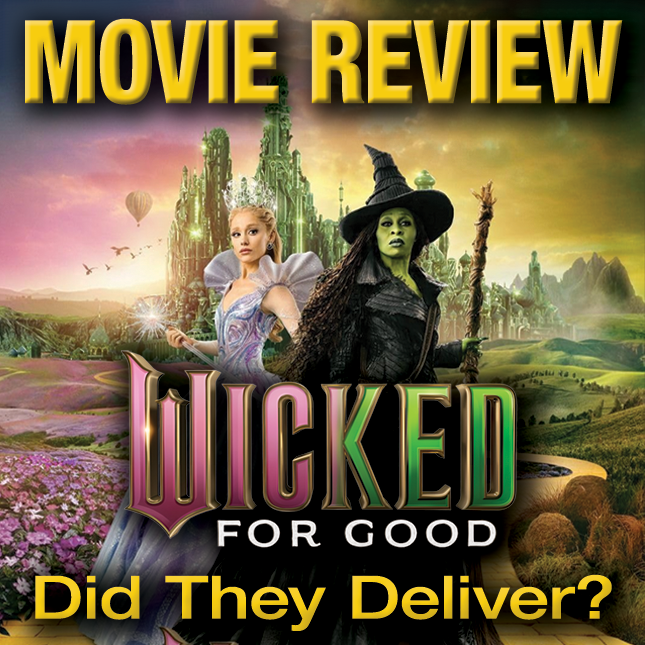
Wicked: For Good, Movie Review – Why It’s Better Than You Might Think

The first Wicked film was everywhere, but Wicked for Good arrived almost silently, and that worried me. So the real question walking into the theater was simple: can Ariana Grande and Cynthia Erivo actually deliver a finale that lives up to the hype the first movie created?

So, is this film ticket worthy? Is Wicked for Good worth your time? Not every film, especially musicals are for everyone. So, let’s get into if Ariana Grande and Cynthia Erivo stick the landing on this one.

You can read the review below or watch the video review on YouTube:

The Emerald City and Oz are in chaos. The Wicked Witch is on the loose. The animals are losing their voices. Fear is everywhere, and Madame Morrible and the Wizard are using Glinda to calm and inspire the people. There are a few core stories that come together in Wicked for Good, which include the evolution of Fiyero and Glinda’s relationship, Madame Morrible’s constant stoking of the public’s fear, Nessa’s growing anger at her situation, and Elphaba’s isolation from everyone she cares about.

These are all big stories with big themes, and Wicked for Good simply picks up where the last film left off, without playing catchup for people who haven’t seen the original.

As tensions rise in Oz, Glinda and Fiyero are forced closer into a confrontation with Elphaba. That’s when we start to see cracks emerge in the carefully constructed Oz façade as they choose what they are willing to live with and what they can’t live without. That’s where the film finally starts showing us the complexities of these characters rather than the more stereotypical fantasy tropes that we get in the first film. Their personal conflicts create personal wounds and solidify relationships the push them into a final confrontation that will impact all of Oz.

First Impressions

One of the most impressive things about this film is the confidence with which Jon Chu opens the story. The construction of the yellow brick road, the cruelty toward the animals who are being used as fuel for its creation, and Elphaba’s intervention in that process sets the tone for everything that follows. That single moment defines the central conflict. Elphaba is placed directly in the crosshairs of the Wizard’s emerging industrial regime, which is trying to create stability and security for Oz that puts all of the power into the hands of the Emerald City.

Glinda steps into her new public role as political forces escalate the situation by turning Elphaba into a symbol of fear. The tragedy is that while everyone essentially desires safety, happiness, and the ability to control their own lives, only a few of them understand who they are really fighting against.

I keep hearing people complaining that the Wizard is made out to be the bad guy, that it subverts the original Wizard of Oz story, and that the “Wicked Witch” is made into the hero. If that’s the story you saw, you weren’t paying attention to the finer details that Jon Chu threaded into the story lines. I’m not going into spoilers here other than what we already know from the first film and the trailer, but seriously, Jon Chu actually shows us the villain who is really pulling the strings and it’s not the Wizard.

Heroes vs Villains

Wicked for Good challenges our ideas of heroes and villains as well as good and bad, but in ways that are a little different than expected. On the surface, the Wizard looks like the evil mustache twirling villain, but he is almost as much of a. mouthpiece for someone else as his giant Wizard face in the reception hall is for him. There is a moment in the film when he and Elphaba have an incredibly honest conversation about correcting the narrative and what the people will and won’t believe and how little power he has to change their perceptions. When you watch the movie or think back on it, if you have already seen it, I encourage you to really pay attention to what the Wizard really desires. He’s not evil, perhaps a little misguided, but not evil, and he isn’t really in control of Oz.

For example, Elphaba unwittingly becomes the villain of her story. She’s absolutely not a hero or at least she is not the hero that she imagines herself to be when looking back at the repercussions, even though she knows what she was fighting for was a good thing. By going up against the Wizard (without realizing her true opponent was actually Madame Morrible) she misses her chance to make an alliance by reacting to so many situations in a way that made it easy for Morrible to brand her as “Wicked” instead of thinking strategically about why the Wizard is doing what he’s doing, even after hearing his subtle admissions to wanting things to be different. As a result, in her fight to help people and the animals in need, she creates a series of unintended consequences that more often harm the very people she was trying to help, making it that much easier to be branded as “wicked” and that much harder to redeem herself in the eyes of the people.

Meanwhile, Glinda steps into public life guided by Madame Morrible as the Emerald City’s way of inspiring people to be calm and happy while they also look to the Wizard for protection from the Wicked Witch. Morrible gives her an electronic bubble to fly around in and a fancy fake wand to complete the picture as well as a fairy tale perfect wardrobe to make her look the part. However, even though this is everything Glinda wanted, she can’t escape how fake and false it all is and that realization slowly seeps into the way she sees herself and her role. She’s pinned up at the hero and the antithesis of everything that Elphaba is as the Wicked Witch, but she loves her friend and she knows that they are the same. They care about the same things, want the same things, and are trapped in the same fight … just on different sides of the conflict with no clear idea of how to solve the problem.

And then Dorothy arrives, bringing the primary battle between the wicked and the good as she goes to the witch’s castle to complete her task of bringing back the broomstick of the Wicked Witch of the West. The Wizard never tells her to kill Elphaba in the book or in the film, but because Dorothy’s story is left out of this film we actually don’t see the battle in anything but a shadow play on the wall. She is celebrated as a hero for killing the Wicked Witch, but that is never what she intended to do nor was it something the Wizard tells her to do. It’s largely an accident on her part, but one that is setup but I won’t say by whom because of spoilers.

What we get here is a complex look at heroism and villainy and the fine line between those two roles and how perception of the people watching it all unfold can be curated and directed to turn villains into heroes and villains into heroes as well as how to hide the true villain in the shadows of the story where they can pull the strings to create a new reality that benefits the power broker that nobody ever suspects.

What I love about this story in Wicked for Good is that it never actually takes a side. It never chooses the Wizard, Glinda, or Elphaba as the hero or the villain. It merely presents their stories as promoted by Madame Morrible and it leaves us to come to our own decision, and there is a bitter truth that all three of them could have been happy together in Oz, if they were given the chance.

Musical Highlights

The performances of both Arianna Grande and Cynthia Erivo are both fantastic. They are talented performers and the actresses just melt away into their characters, keeping the story front and center the whole time. However, this is a musical. So, we should talk about the music, and I was honestly surprised that the music in this film is its most surprising achievement because I have always preferred the music from the first half of the stage play. So, I went into Wicked for Good expecting a ho-hum musical story, but Stephen Schwartz’s return to compose two new songs gives the film a cohesion that ties the old and new music together beautifully. It elevates the story in this film to actually be deeper and much more mature than in the first film. Plus, the two new songs allows us to see who Elphaba and Glinda are when their masks fall away.

“The Girl in the Bubble” is where Glinda finally stops performing her happiness. Ariana Grande shows us the loneliness behind the glitter and shine of being Glinda the Good. It’s the moment when she steps away from the part she has been playing for everyone and becomes the person she wants to be for herself.

“No Place Like Home” is Elphaba’s emotional center. Cynthia Erivo’s voice reveals the grief, longing, and clarity that define the loneliness of her journey. She loves Oz even though Oz has rejected her at every turn. The song captures the essence of her story and the longing of a woman trying to do what’s right in a world determined to misunderstand her.

Jonathan Bailey’s song as Prince Fiyero and Elphaba admit their love to each other adds warmth to the film. He’s handsome and strong, and he’s got a great singing voice. However, during that romantic scene, it feels a bit like he’s over acting and it creates some odd facial expressions that just popped me out of the movie. But it wasn’t enough to ruin the film or his character.

Michelle Yeoh and Jeff Goldblum remain compelling as actors, but unsurprisingly, their songs are not a high point. It’s not that they can’t sing. Hey, they sing better than I do, that’s for sure, but when compared to the voices of Arianna Grande, Cynthia Erivo, and Jonathan Bailey they just sound weak and you just want them to stop.

Visual Effects

As good as the music and acting is in Wicked for Good, the effects blow everything else away. This film is gorgeous in every way. From the physical set designs to the digital effects, the cinematic triumph of this film is the visuals. This movie is cinematic magic.

In the first film, there were occasional moments when the digital effects created this uncomfortable blur that hurt my eyes, but that was not an issue here. It really goes to show how quickly digital tools are improving and how much a talented engineer can improve the audience experience because these effects were dialed in and gorgeous The combination of the cinematography, costuming, and effects created a world that feels consistent and real from scene to scene.

If this is the future of AI-assisted effects, used by talented human engineers who have the vision and imagination for seamlessly blending physical and digital designs, I think Hollywood films just might have a chance of pushing films into a new era of design, especially since this film reportedly only cost around $150 million to make.

Recommendation

So, is Wicked for Good ticket worthy? Well, it’s not perfect, but it’s a lot of fun. It respects the audience, the characters, and the legacy of The Wizard of Oz. Cynthia Erivo and Ariana Grande deliver strong performances. Plus, the music was so much better than expected, the visuals were outstanding, and the story comes together in a way that feels earned … but with two giant exceptions. If you haven’t seen Wicked or The Wizard of Oz, you are going to be absolutely lost. If you saw Wicked but not The Wizard of Oz you won’t be lost, but you’re not really going to get the most out of the ending and the story as a whole.

If you enjoyed the first film, you will almost certainly enjoy this one. It ties everything together with emotional maturity, musical strength, and thematic depth. The character arcs land, the story expands meaningfully, and the world feels complete. So, yes, for fans of Wicked and for fans of The Wizard of Oz, Wicked for Good is absolutely ticket worthy.

Now, bringing us back to reality, if you don’t enjoy musicals or drama-focused fantasy storytelling, this film won’t change your mind because it embraces those genres completely and never apologizes for it.

Final Thoughts

So, Wicked for Good, have you seen it? Are you planning to? Did you enjoy the first film? And, most controversial of all, do you think they should do a remake of the OG film The Wizard of Oz? Let me know in the comments.

If you enjoyed this review, please give it a like and subscribe for more. You can also visit my YouTube channel at @ErinUnderwood for more videos.

***

If you’d like to read WICKED, listen to the soundtrack, or catch up on The Wizard of Oz, you can use my Amazon Associate links:

Posted in Movie Reviews, Movies, Reviews, Uncategorized, YouTube | Tagged , , , , , , , | Leave a comment

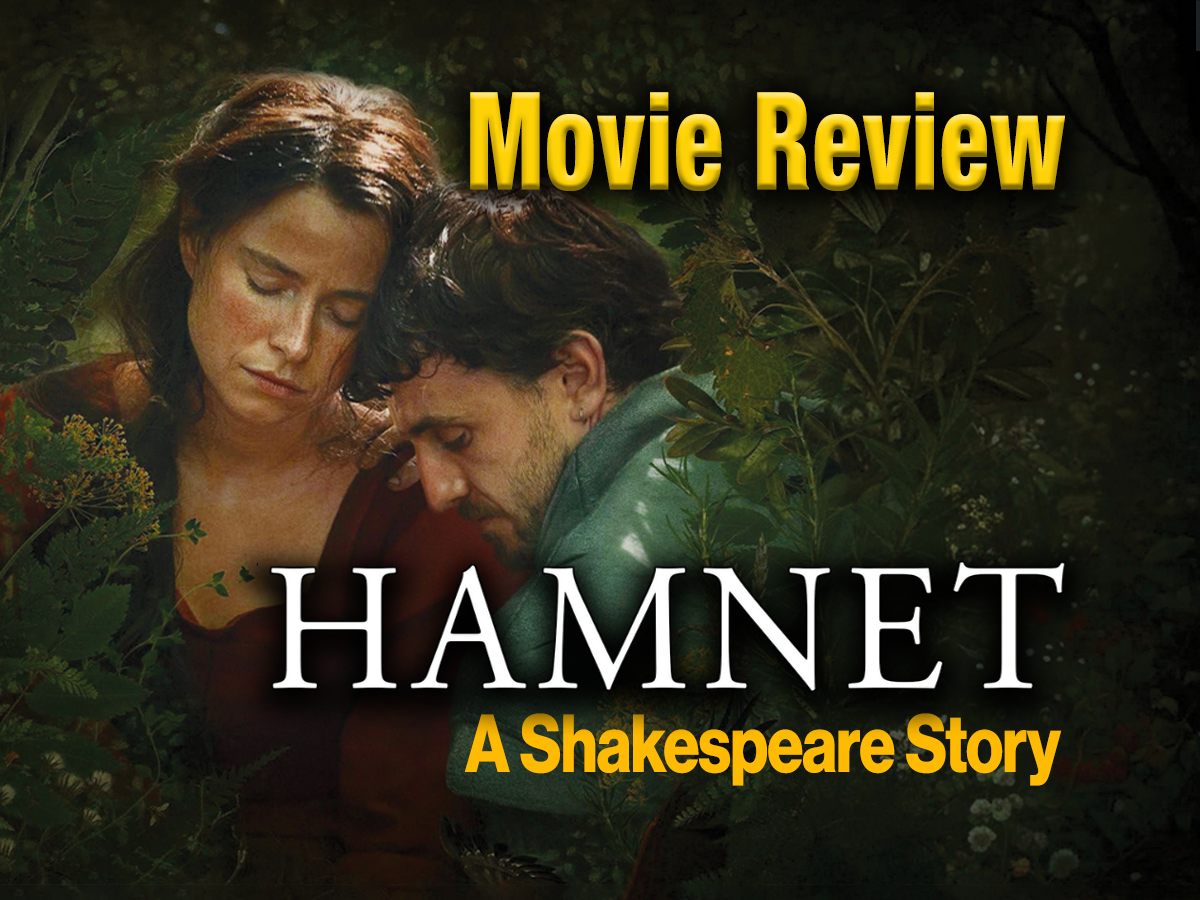
Hamnet (2025), Movie Review: A Heartbreaking Masterpiece

Hamnet is a new movie about the marriage of William Shakespeare and his early family life. It’s directed by Chloé Zhao, who is best known for The Eternals, even though that film didn’t show what she does best. Hamnet, however, is exactly the kind of project that plays to her strengths as a director. The result, and I’m not even going to beat around the bush on this one, is fantastic. That doesn’t mean it’s for everyone, but if this is the kind of film you like, you are going to be blown away by the story and by the performances from Jessie Buckley, Paul Mescal, and Jacobi Jupe.

I loved this film. Hamnet is quite possibly one of the best films I have seen all year, and I was a bit annoyed that nobody warned me to bring a Kleenex. So, I’m warning you to bring a Kleenex (or two) because, if you are like me, you’re going to need it.

Here’s the thing about Hamnet, the film gets so much right that the problems just fade away. If you are a fan of William Shakespeare, the Tudor era, period dramas, or romance that will break your heart, Hamnet’s story and structure are so well constructed that they immediately pull you into the lives of William and Agnes “Anne” Hathaway.

You can read the review below or watch the video review on YouTube:

Hamnet is a historical drama based upon the first 15 years of Agnes and William’s life together. We see them meet, fall in love, and start a family together in Stratford. It introduces us to the magic that seems to swirl around Agnes as well as the clever games their children would play, and how their family life was ultimately an inspiration for Shakespeare the writer. We also see what William and Agnes are willing to sacrifice in order to preserve the happiness of their spouse and family. The entire story becomes the emotional root of Shakespeare’s play Hamlet.

First Impressions
A word of warning that while this film is based on William and Agnes’ life and the events surrounding their children, it isn’t always historically correct. The key plot points align with what we know, yet the film pulls in elements from Shakespeare’s plays in ways that show us the moments and experiences that might have inspired his plays, poetry, and sonnets. The reason this works so well is that the experiences and conflicts are filled with both the comedy and the tragedy, and you can see the DNA of his writing in those experiences, which are woven into the film so naturally that they feel organic. It feels like this is how everything must have happened to spark the stories that poured out of Shakespeare when he was writing.

The film keeps the story moving forward and makes it relatable by creating complex characters who find beauty in each other despite, or perhaps because of, the challenges that life and circumstance present. You feel the natural world around them. You understand why they do what they do. Their conflicts make sense and the ways they find resolution feel just as real.

We also get this lovely dance between the romanticized version of their life together and the bitter truth of the hardships that came with their circumstances and the period when they lived. Life wasn’t easy, but they found joy in each other and in their family. That sense of connection is everything that drives both William and Agnes and ultimately becomes the well of inspiration for the greatest writer of all time.

Focus on the Family
What’s clever about Hamnet, and you don’t even consciously realize it until this one scene in London, is that the film never names William Shakespeare in any way. There is really only one scene that does name him, and you don’t get that until closer to the end of the film. Still, we know it’s him, but by avoiding his name don’t get wrapped up in our fascination of The Bard. Instead, the focus stays on this imaginative and impulsive young man who falls madly in love with a woman who some people labeled as a forest witch because of her knowledge of herbs and natural remedies.

This also allows the film to capture the emotional truth of his transition from the young husband to the iconic playwright. It builds a parallel between the family’s grief and what is arguably considered the greatest stage play of all time.

The film also stands out in contrast to a lot of what we see today in theaters. Many modern stories feel like they’ve been softened, almost made therapeutic. Conflicts are simplified, the emotional toll of love and loss is flattened, and painful experiences are often avoided or easily resolved. This film does the opposite. It lets the pain fully exist, and the way it happens, we feel it along with the characters, which makes it feel that much more realistic. It lets the devastation land in expected ways that still feel surprising. It asks how a family survives something that crushes you, how art can rise out of that wreckage, and how that pain can translate into experiences that impact us all century after century after century. That is the terrible beauty of this film and it’s why this adaptation works.

Cast and Characters
Jessie Buckley gives Agnes a sense of mystery and magic to the story. She feels connected to nature, to superstition, to intuition, and she brings an emotional strength that becomes the backbone of her family. Her performance is layered, vulnerable, and deeply moving.

Paul Mescal plays William as a man torn between the pull of London and the comforts of home. He needs to create, and if he doesn’t, his art feels like it will literally rip its way out of him, and we get this all from a single scene and Agnes’ reaction to him. Paul Mescal’s performance is gentle but ambitious. We feel the crushing pressures around him, and his response to Jessie Buckley’s performance is sincere and believable. It feels like we are seeing a relationship develop on camera and then threaten to split apart in devastating pain.

The children aren’t background elements. They all do a great job in their roles, but Jacobi Jupe, who plays Hamnet, is so endearing that you can’t help but love the boy. Is he acting, or is he truly that sweet and wonderful? I have no idea, yet he is the spark that sets the conflict on fire in this film, and you can’t help but to adore him.

The supporting cast also includes Emily Watson and Joe Alwyn, who both highlight exactly what a supporting actor is supposed to do. They don’t steal the show. Instead, they help create a realistic world in which both William and Agnes feel like the center of this small little universe.

The Problems
So, I often say that even the best films have problems, and it would be insincere of me not to mention the few that stood out for me in Hamnet. The film comes in at over two hours, and there are a few times when scenes linger just a little too long, and the film could have easily been cut by about 15 or 20 minutes.

There are also some obvious moments in which the director shows us, point blank, which famous lines of dialogue or scenes from Shakespeare’s plays come out of certain moments of conflict, pain, and joy in his life. Some of the historical elements are also moved around to elevate the story, although I don’t think most people will care because the overall impact is wonderful.

Finally, I think the hardest thing for some viewers will be the slow build-up, the family drama, and the lack of action because we have been trained to expect fast-paced storytelling in our films.

Is It Ticket Worthy?
Is Hamnet ticket worthy? For me, obviously yes. If you love cinema that asks you to feel something real alongside the characters on screen, and you enjoy period pieces and historicals, you’re likely to enjoy this film. If you are a Shakespeare buff, this feels like one of the best films about him that I have ever seen, although I didn’t realize that until about the halfway point in the movie. This is an art film with an emotional story that cuts into the deepest parts of the human experience, and it’s a movie that asks you to sit with it, to let it breathe, to let the emotional weight settle into you as you watch.

If none of this sounds like your cup of tea, skip this one. The story unfolds slowly, and the action is likely not what you’re expecting if you prefer a fast-paced, sharply told film. If you are not a fan of period pieces without the conveniences of modern life, this isn’t a film for you.

Final Thoughts
So, Hamnet! Are you thinking of seeing it? Are you a Shakespeare fan? Let me know in the chat below. Tell me your favorite film about Shakespeare or your favorite play. Have you ever been to the Globe? Let’s talk about it.

If you enjoyed this review, please give it a like and subscribe for more. You can also visit my YouTube channel at @ErinUnderwood for more videos.

***

If you’d like to read HAMNET, you can use my Amazon Associate links:

Posted in Movie Reviews, Movies, Uncategorized, YouTube | Tagged , , , , , , , , | Leave a comment

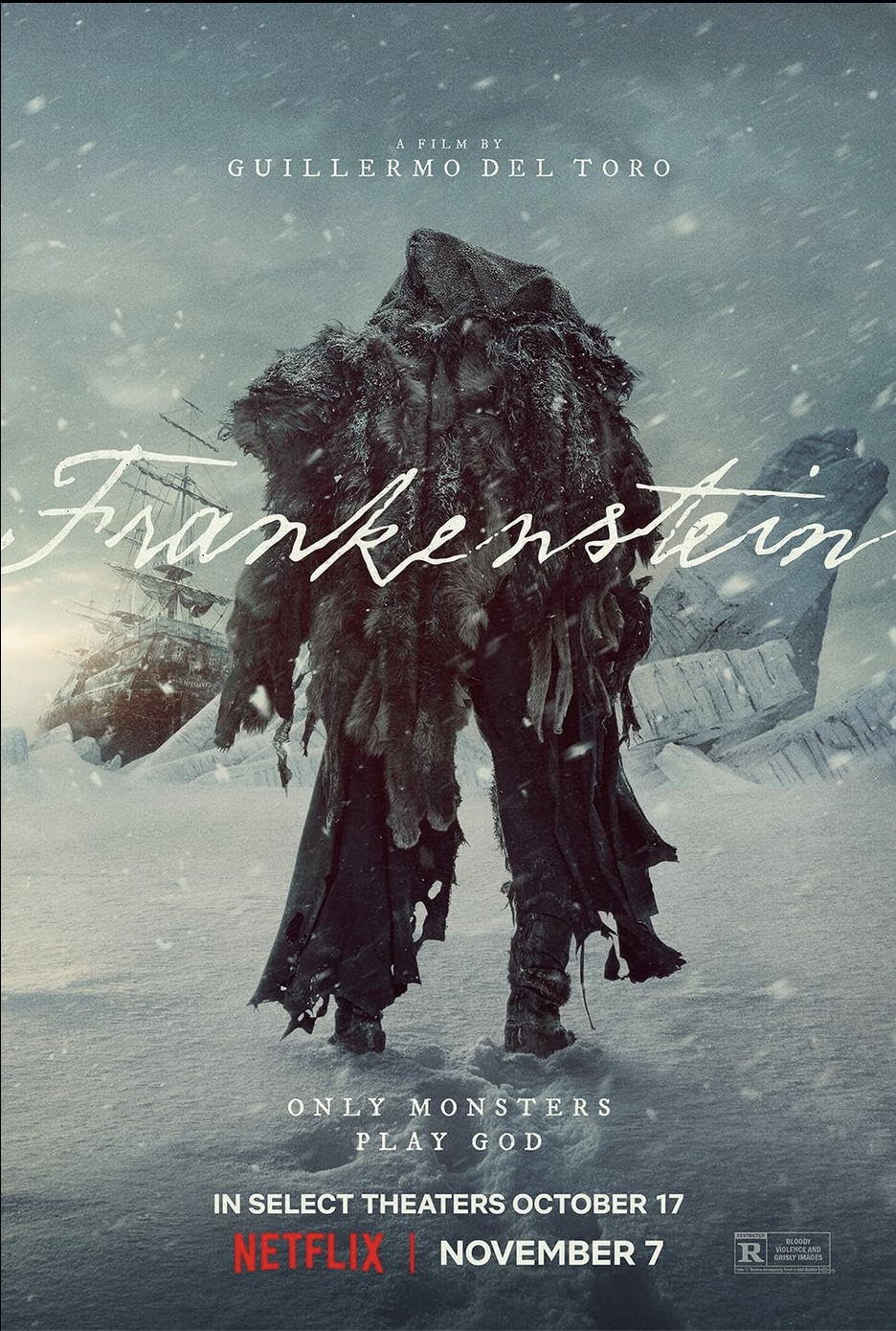
Frankenstein (2025) Review – Would Mary Shelley Like Guillermo del Toro’s Movie?

Frankenstein by Mary Shelley is one of the most beloved horror novels ever written. It has inspired countless adaptations, retellings, and reimaginings. Shelley’s novel has influenced generations of writers and scientists alike. It has shaped technology, inspired new inventions, and become a cornerstone of how we talk about creation, imagination, horror, and humanity.

When a new version of Frankenstein comes along, it has to rise to the occasion. It has to bring something new, something innovative, something worthy of Shelley’s masterpiece. So, is that what director and writer Guillermo del Toro achieves with his new adaptation, and what would Mary Shelley herself think of this new film?

Frankenstein has a short theatrical release followed by a Netflix premiere on November 7. So if you’re trying to decide between seeing it in theaters or waiting to stream it, I hope my review will help you figure out which experience, if any, might be the best for you.

You can read the review below or watch the video review on YouTube:

The Story – Victor and his Creature
Frankenstein is the story of two men: Victor Frankenstein and his creation. Victor is a driven scientist and medical doctor whose life is defined by the death of his mother and the cruelty of his father. That trauma sends him on a relentless quest to overcome death itself. He wants to conquer mortality and master the forces of life and death.

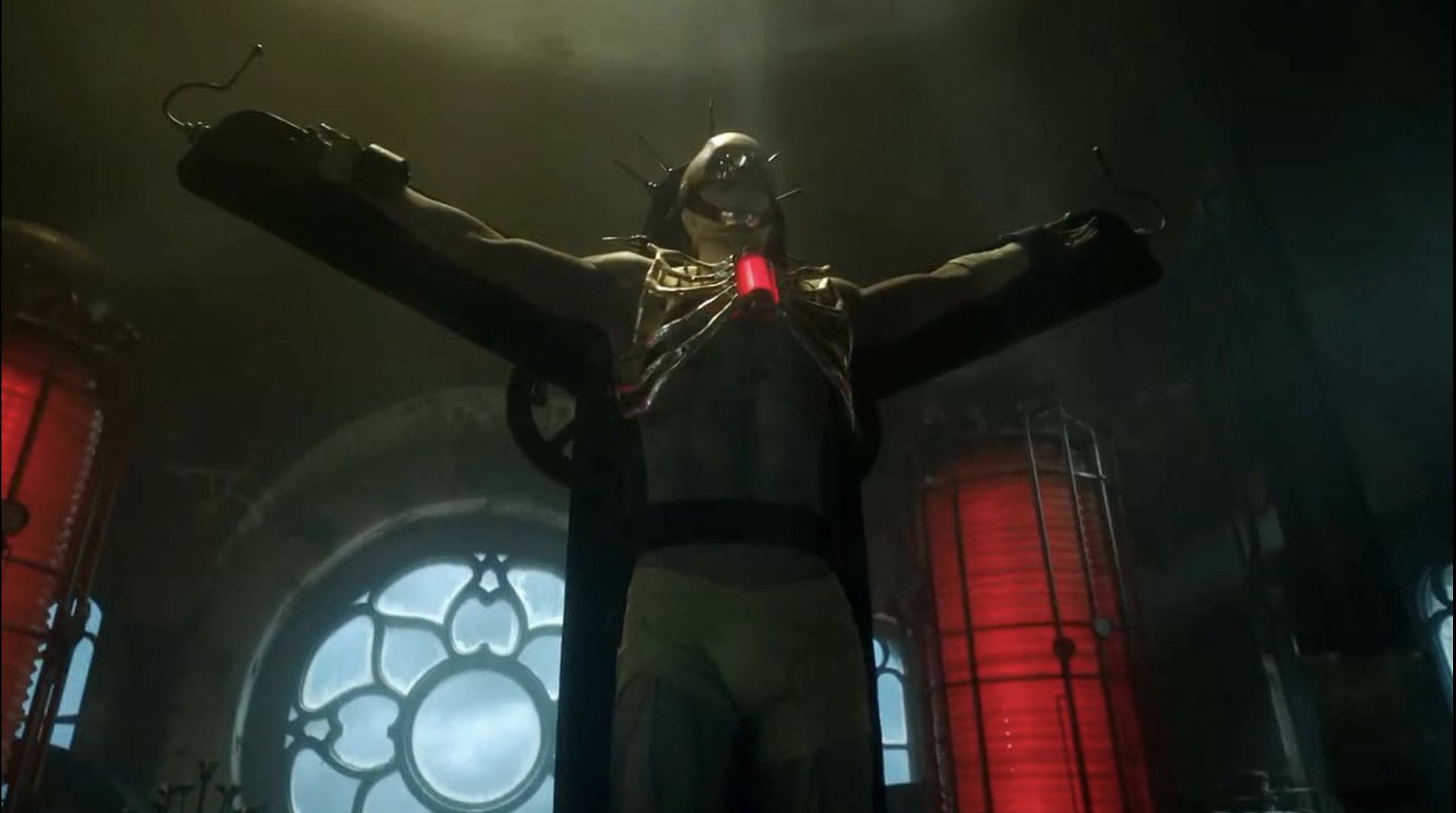
The other man is his creation, known simply as the Creature. He is the living result of Victor’s obsession, genius, and success, and his existence sets everything in motion.

What works especially well in this adaptation is how Guillermo del Toro structures the narrative. The story unfolds in three interwoven layers. The primary layer is the present-day confrontation between Victor and the Creature, which opens and closes the film and threads the whole narrative together. The second layer is told from Victor’s perspective. We see his formative years with his family, his adult relationships with his younger brother William and with Elizabeth, and his professional work that defines life.

The third layer is from the Creature’s perspective, revealing what happens after he is brought to life. We see the world’s reaction to him along with his confusion, their cruelty, and the experiences that shape his understanding of himself and how he is seen.

Del Toro’s version digs into the humanity that binds family together and shapes who we become, first through childhood and then through how our experiences as adults change our place within that family. We see both men wrestle with fear, compassion, and violence. Their stories mirror each other and lead to a final confrontation.

I’ll keep this review spoiler-free through the Recommendation section, so it’s safe to read up to that point. I get into a few key spoilers in my final thoughts at the end. So, if you prefer no spoilers, you’ll be able to stop before then and come back after you’ve seen the film.

Monster or Man?

Victor’s obsession with conquering death drives every moment of his life. Guillermo del Toro builds on that foundation to explore what it means to create life in a world that rejects those who are different. The film also asks tough questions like what it means to be human, to be alive, and to be unwanted.

Those are strong themes that are highlighted with precision. He does not try to recreate Shelley’s story beat for beat. Instead, he adapts the ideas behind those story beats, including grief, loneliness, ambition, and parental responsibility. He also brings those ideas into a modern frame by tapping into classic social issues in a way that is clearly designed for a contemporary audience.

The result is one of the most human interpretations of Frankenstein I have seen. The Creature feels like a man who is powerless to earn his father’s love and approval, and his presence inspires both horror and sympathy in those around him. He has a moral center that evolves through each new experience, which makes his humanity impossible to ignore despite his scars and rags.

Cast and Characters
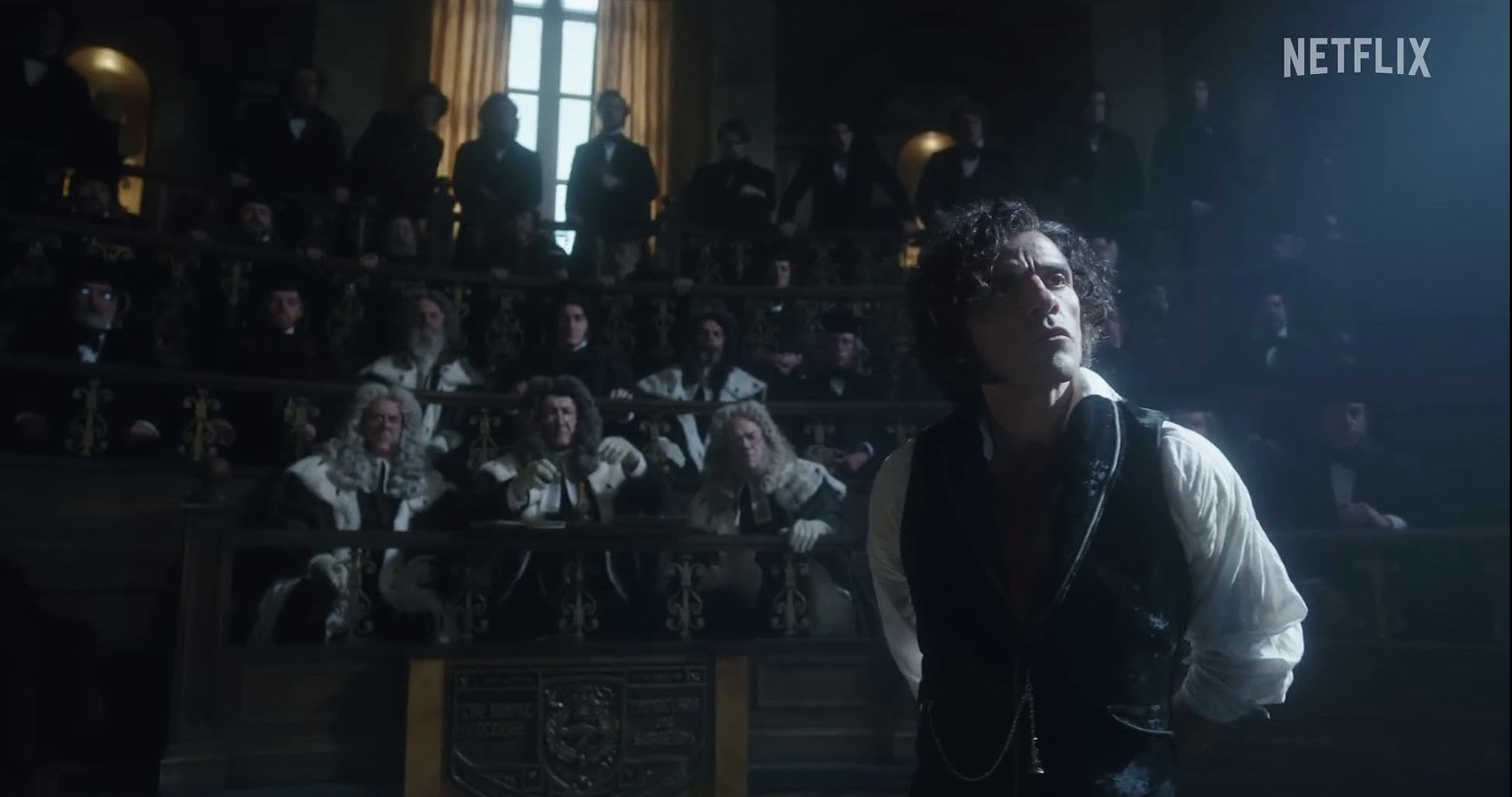
Oscar Isaac plays Victor Frankenstein, and he does a good job in the role. His performance leans into Victor’s arrogance and obsession, which makes him less sympathetic and much more distant or insufferable as a scientist and as a man. However, I think that it works for what this version of Victor needs to accomplish, even if that choice makes him feel a bit flat at times.

Jacob Elordi, who plays the Creature, delivers a truly exceptional performance. He brings vulnerability, pain, and intelligence to a character that could easily have been reduced to an angry, disfigured man-child turned into a monster by his father. That is not the Creature we get. His body language and his eyes tell the story as much as the dialogue, and he makes you care about this strange being who was never meant to exist.

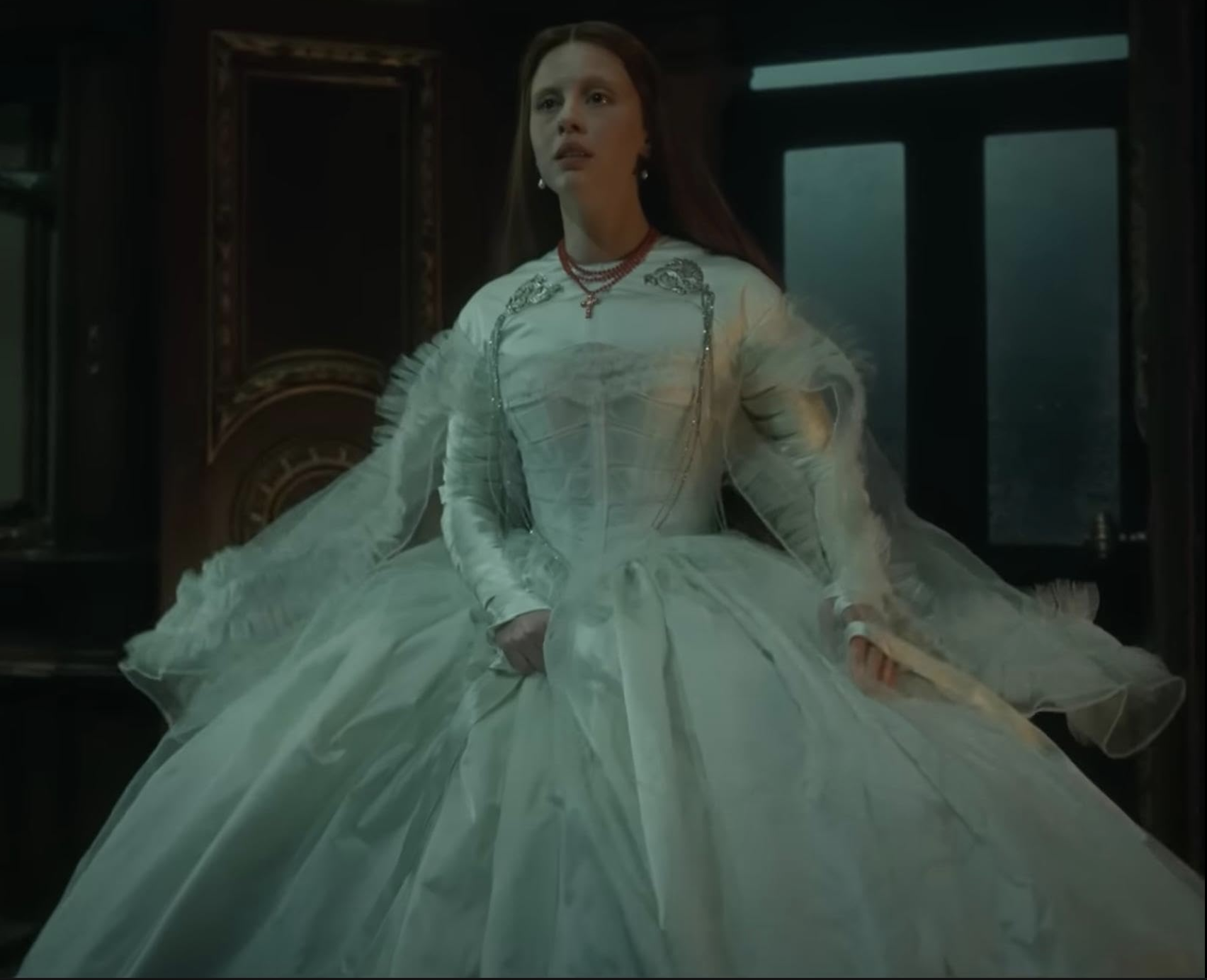
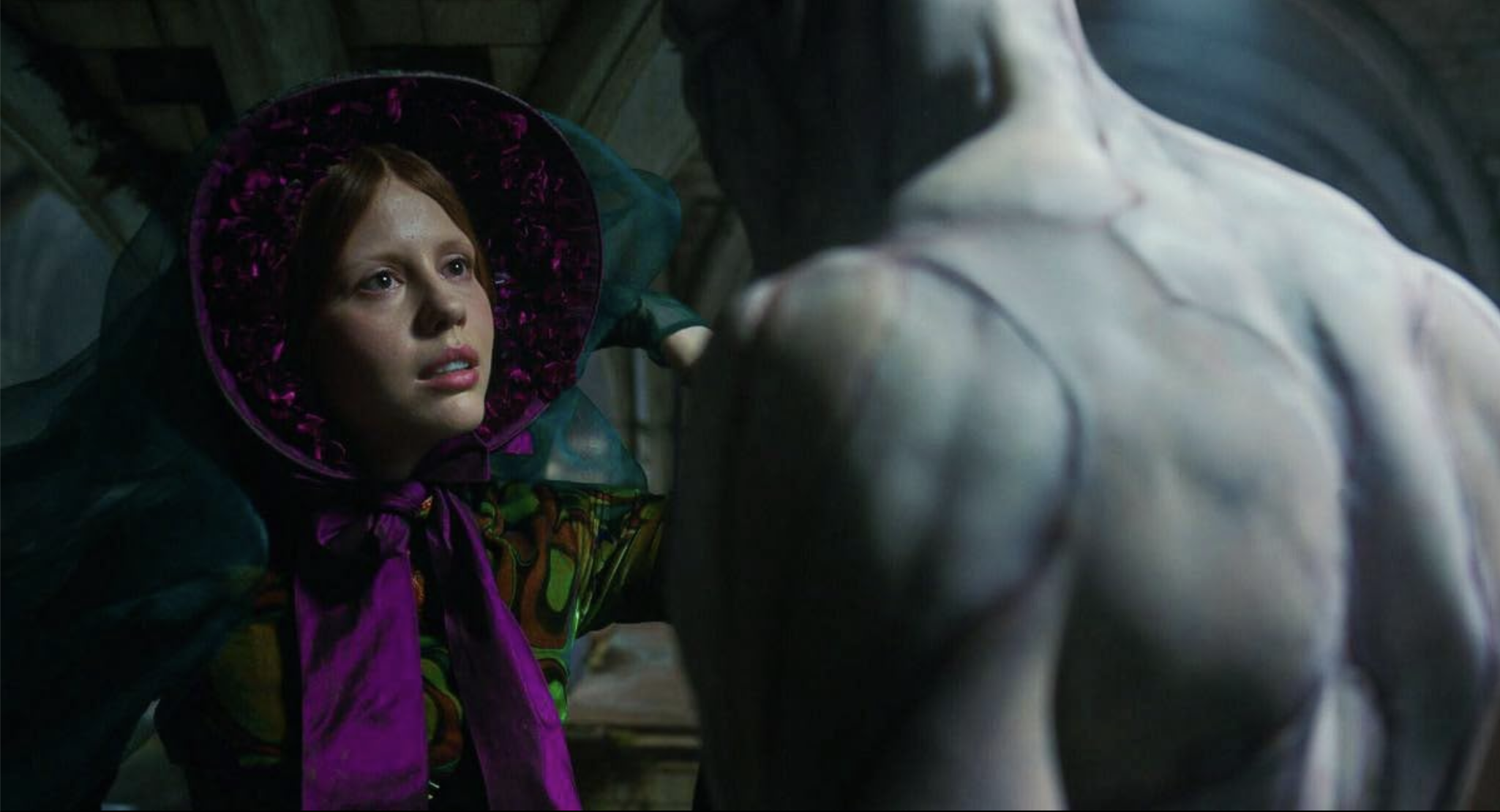
Mia Goth as Elizabeth is visually perfect for her role. Her relationship to both Victor and the Creature becomes the catalyst for conflict because she inspires jealousy and desire that fuels their conflict. She is the physical symbol of youth and beauty in this grim and grey world full of decay. Del Toro uses her as a young, vibrant lens through which the audience first sees the Creature’s humanity, and later that perspective is echoed in the mature perspective of the old blind man who befriends him. Through their compassion for him we understand the Creature as a man, and we feel his pain at not receiving any kind of affection from the one person he most wants it from.

The Heart of Frankenstein
Del Toro’s version of Frankenstein focuses less on horror and more on character development. There are moments of gore, but the real horror comes from the emotional and moral weight of the story. It reflects the way society reacts to the unknown and the way parents reject their children when they do not meet expectations.

What makes this adaptation stand out is its restraint. Del Toro understands that audiences already know the Frankenstein myth. We have seen the lightning, the lab, and the shouts of “It’s alive!” countless times. Rather than repeating those familiar scenes, he offers something more introspective that explores our own humanity through the relationship between Victor and his creation.

The film runs long at roughly two and a half hours. Cutting 30 to 45 minutes would have made the film tighter and more focused without sacrificing impact. The benefactor storyline in particular feels unnecessary and takes time away from the emotional core of the story.

Visual Artistry and Design
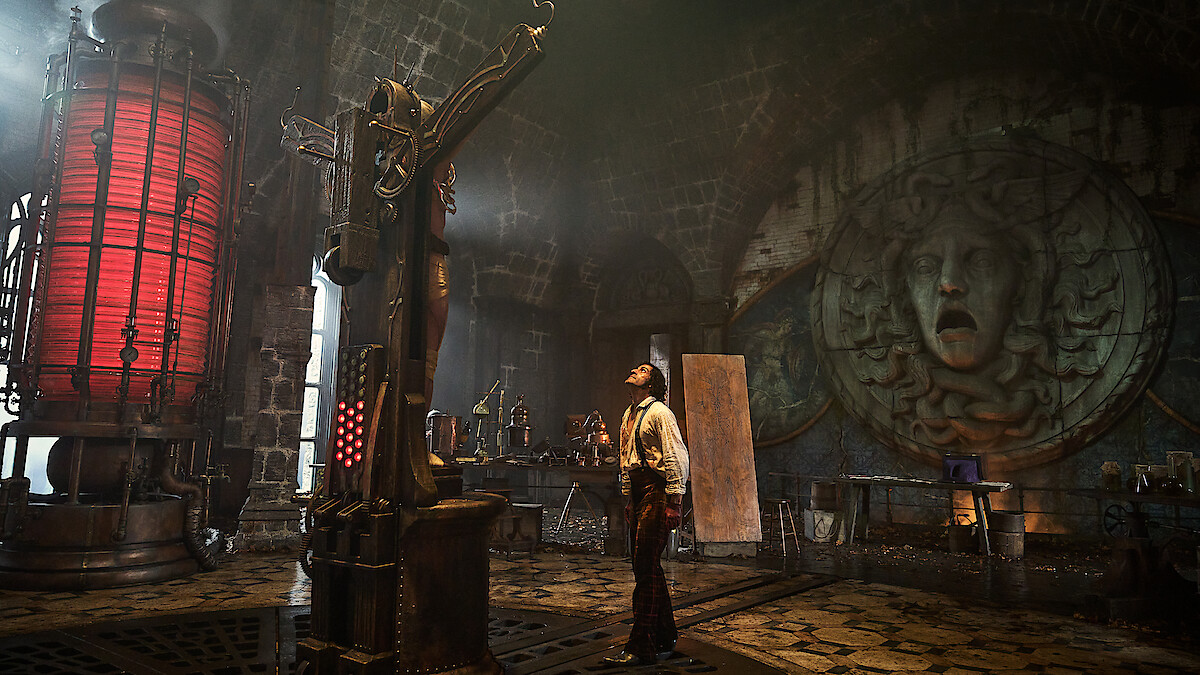
Visually, Frankenstein is stunning. Every shot is meticulously crafted, from the gothic landscapes to the muted Victorian color palette. The architecture, the lighting, and the costumes all contribute to the film’s dark beauty.

The stitching on the Creature’s body is intricate and artistic. Instead of grotesque seams, the lines are smooth and rounded, creating a deliberate, almost mystical pattern that turns his skin into a work of art. In her novel, Shelley described Victor as assembling the most beautiful features he could find, and del Toro carries that idea further by transforming imperfection into a strange beauty.

When it comes to the cinematography, production design, and visual effects, it is difficult to tell where the practical elements end and the digital elements begin. The film blends physical sets, AI-assisted visuals, and VFX work so naturally that everything feels grounded and real. It is one of the strongest examples of how visual storytelling has evolved in modern filmmaking, creating a new level of immersive realism.

Is it Ticket Worthy?
So, is Frankenstein ticket-worthy or stream-worthy? I think most people will enjoy the movie, if they are open to the changes made for this film. If you want to experience the full artistic impact of Guillermo del Toro’s vision, see it in a theater. IMAX, Dolby Cinema, or laser projection will give you the immersive experience this film was designed to create. If you wait for Netflix, you will still get a beautiful, well-told story, although it will not feel as monumental as it does in a theater.

If you are a Frankenstein purist, del Toro’s film does not follow Shelley’s novel point by point. Some of the missing story threads might frustrate you, although those changes are what give this film its distinct identity. Del Toro captures the essence of the original story, holding onto the atmosphere, the moral questions, and the evocative visuals of the period while reframing the themes for a modern audience. This is a subtle but powerful shift that makes the Creature feel uniquely human.

So, to answer my original question, what would Mary Shelley think of Guillermo del Toro’s adaptation? I think she would recognize her story and appreciate what he did with the Creature’s emotional depth. She might question the way responsibility and closure are shifted near the end, since her novel leaves the Creature with no true resolution and holds Victor accountable without emotional reward. Even so, I believe she would love how much humanity del Toro places in the Creature and how that humanity focuses the impact of her story.

If you are stopping here to avoid spoilers, please like this video, subscribe, and share it with a friend who might enjoy it. For those who want to go a little deeper, let’s talk about a few spoilers.

**SPOILERS ** and Final Thoughts


Possibly the biggest spoiler surprise is what is missing from the film. We never hear the Creature say, “Father, you made me.” That single line in Shelley’s novel is powerful. It defines the relationship between creator and creation, and between parent and child. Its absence feels like a missed opportunity, especially given how deeply the film explores their connection

In the closing moments, Victor asks the Creature for forgiveness and tells him to forgive himself. While the idea of forgiveness loosely echoes the book, forgiveness and accountability remain out of reach for both Victor and the Creature in Shelley’s story. There is nothing the Creature does in del Toro’s film that feels truly evil or in need of forgiveness. The violence on his part is always defensive. He is the one who suffers violence without retribution. So hearing Victor tell him to forgive himself rings hollow and is perhaps del Toro’s way of showing that Victor still refuses to take responsibility for the harm he caused.

One of the most significant changes involves Elizabeth. She is engaged to William, not Victor. This fuels Victor’s obsession with her, which becomes one of the emotional pivots of the film because she does not return his affection. Instead, her most genuine emotional connection is with the Creature, which Victor cannot accept. She shows the Creature kindness and compassion, seeing his humanity when no one else will. That empathy shapes who he becomes, and it also leads to Elizabeth’s death when she tries to save him. She dies from Victor’s bullet, not at the Creature’s hands, and that twist reframes the Creature’s character arc in a way that preserves his kindness and humanity. It turns Victor into the true monster and positions the Creature as the tragic protagonist.

Del Toro’s adaptation does not mimic the original story. It adapts its essence and translates those ideas into a film that will speak to today’s audience. There are other missing story threads that are not completed or included. Those choices are clearly intentional, and if you are familiar with the original novel, I think you will feel their absence. Even so, with its flaws and omissions, the film succeeds as a piece of art that questions morality, compassion, and the human cost of creation.

If you enjoyed this review, please give it a like and subscribe for more. You can also visit my YouTube channel at @ErinUnderwood for more videos.

***

If you’d like to read FRANKENSTEIN, you can use my Amazon Associate links:

Posted in Movie Reviews, Movies, YouTube | Tagged , , , , , , , , , , | Leave a comment

Good Fortune Movie Review | Keanu Reeves Is Heaven-Sent Comedy Gold

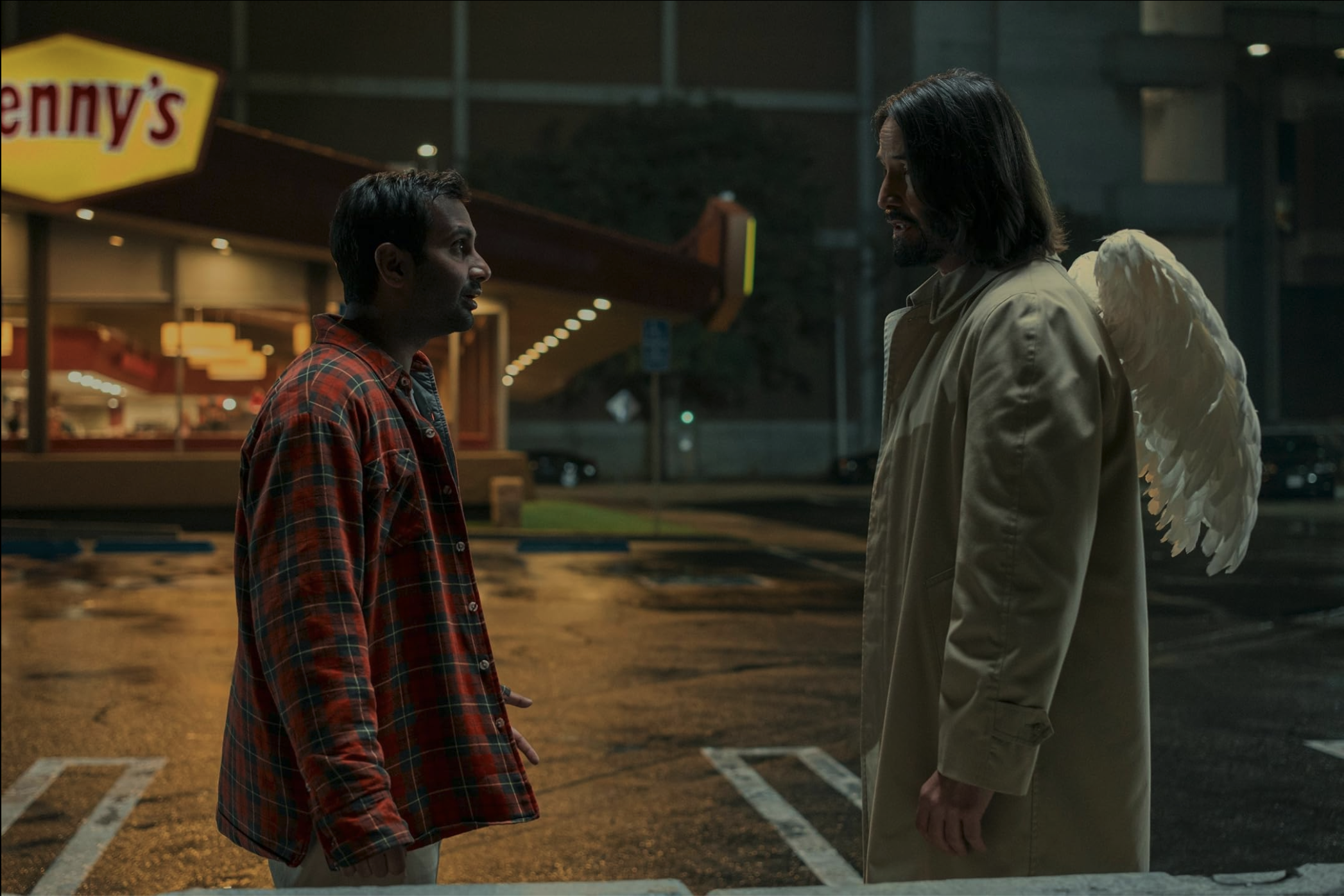
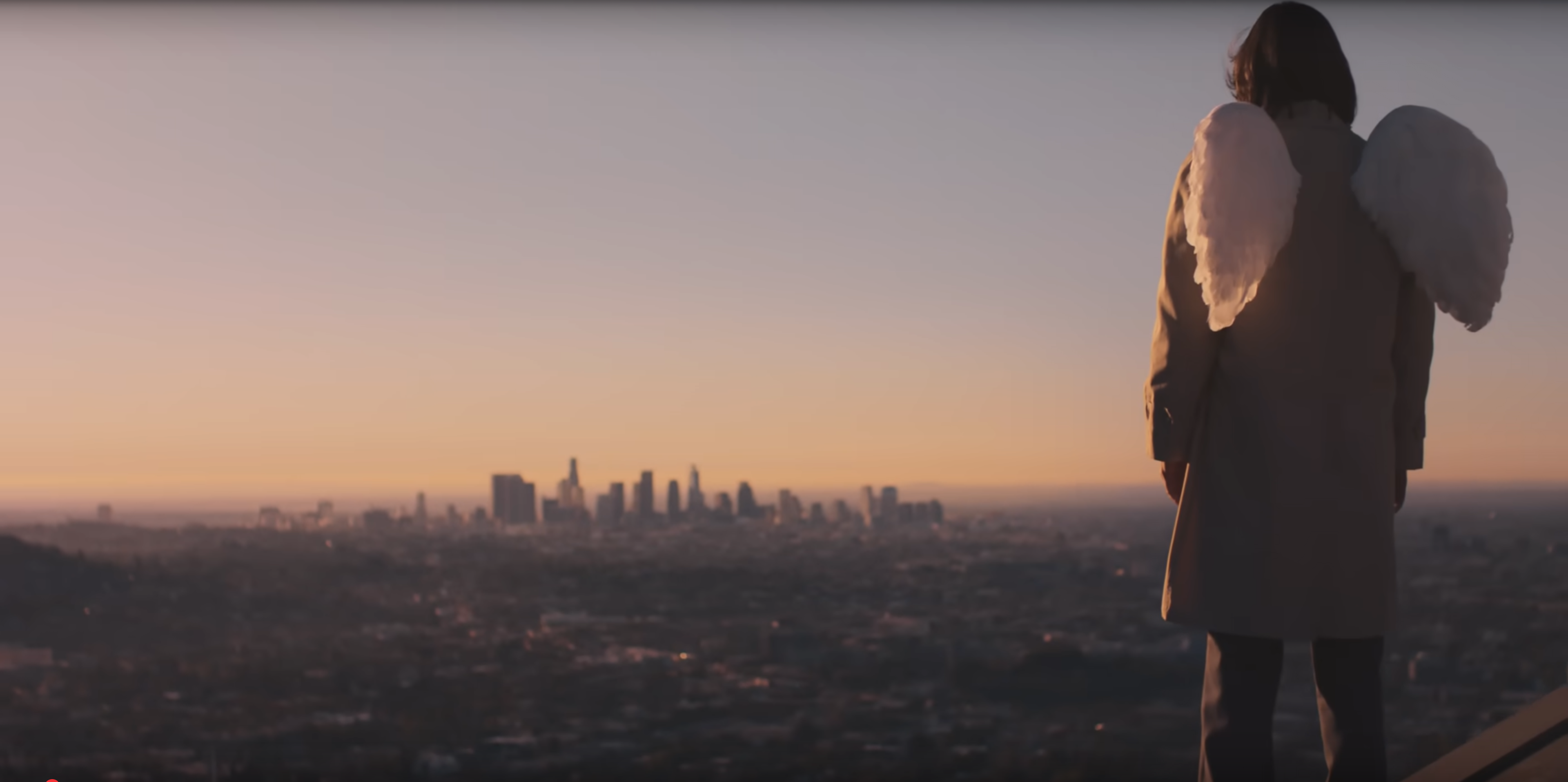
The film Good Fortune transforms Keanu Reeves from everyone’s favorite gun wielding assassin in the John Wick universe into a miracle wielding angel with wings that are a couple sizes too small. I’m a Keanu Reeves fan, and just the idea of him as a slightly goofy angel was enough to get me into the theater because I had a feeling that Good Fortune might be a bit of a pet project for him. Honestly, it felt like he was having a lot of fun with this one.

But, how did he do? How does this new comedy hold up for a theatrical release with the slow return of comedy to the theater, especially at a time when it feels almost impossible to get people to the movies because of the insane increases in the price of everything from toilet paper to pasta. Let’s talk about Keanu’s angelic comedy. Is Good Fortune the break you need or are you still waiting for a comedy miracle?

You can read the review below or watch the video review on YouTube:

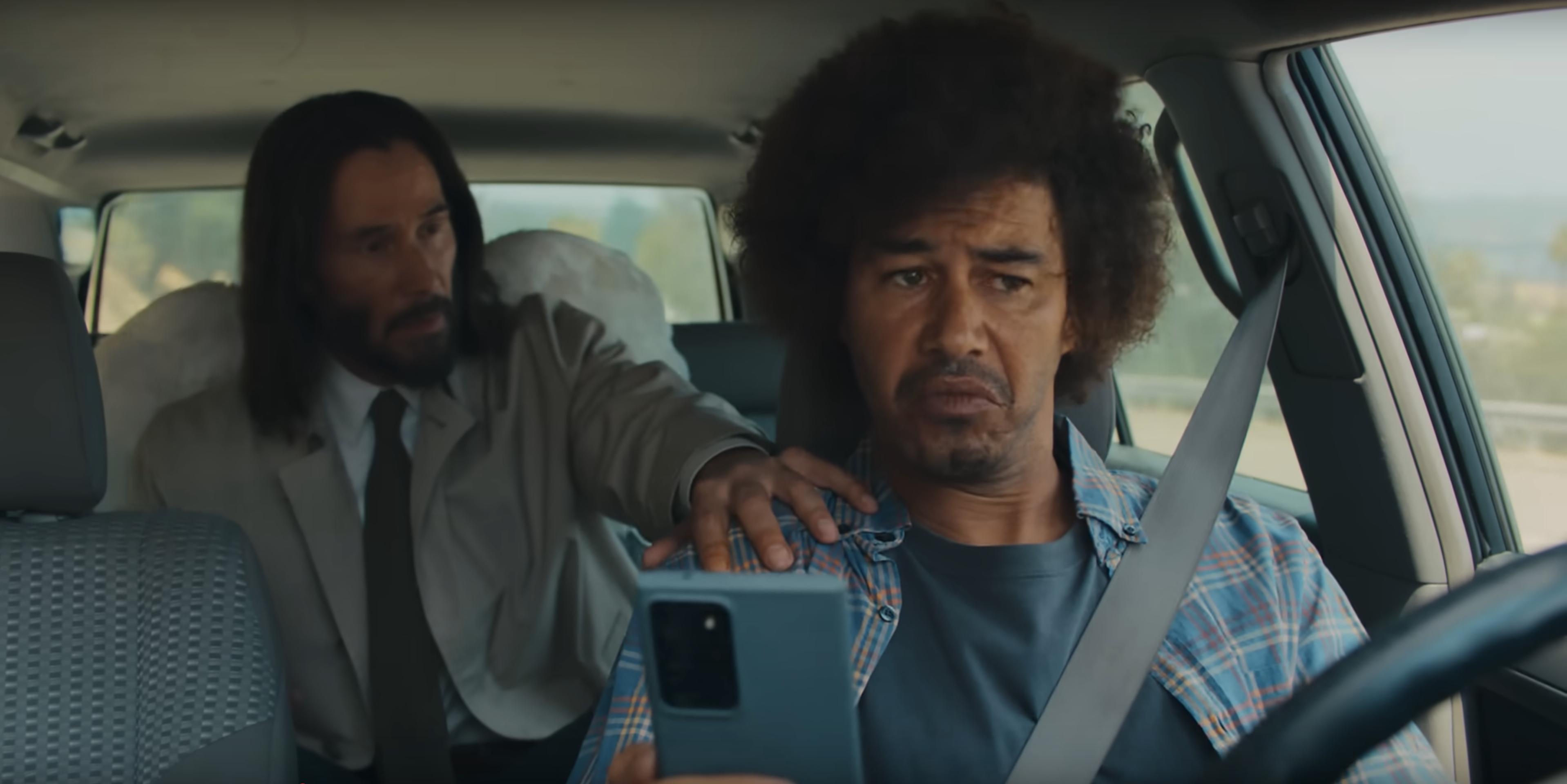
Good Fortune is the story of Gabriel, a lower rank angel whose main job is to stop people from texting and driving. He is not exactly fulfilled by his heavenly duties and wants something a bit more meaningful. He wants to truly help someone, not just play traffic cop from the back seat for eternity.

That’s when he crosses paths with Arj, a regular guy who has been beaten down by life and is hanging on by a thread. Gabriel sees this as his chance to finally do something that matters, to help guide a soul, and to find a little purpose in his own eternal existence.

When Gabriel swaps the lives of Arj and the super a super rich tech bro named Jeff, he expects it to be a simple lesson. Show Arj what he has in his life that’s worth living for and then switch them back. Except Arj had different plans, and that is where conflict and comedy collide as this life swap, lesson learned story goes suddenly sideways.

First Impressions

One of the first things you notice about Good Fortune is that this story structure has been done a million times. The idea of an angel or supernatural being giving people a chance to see life from someone else’s perspective is nothing new. We have seen versions of this before in It’s a Wonderful Life, The Family Man, Freaky Friday, and so many other films. What’s nice about Good Fortune is that it picks a tried and true structure for the story, but it really dances around the line of falling into a cliché or becoming a boring “seen it before” type of movie.

Still, a well-worn story structure doesn’t mean that a film like Good Fortune can’t work. It just means that the film needs to do more work to fill in the story with new conflicts, new details, and unexpected character arcs that play into the comedy, drama, or both that will generate a feeling from the audience. Good Fortune actually does just that, and the freshness comes from the fact that each of the three characters in this ensemble film experience an arc, not just the characters who gets the life swap to learn a lesson. That is different and frankly having the angel learn a lesson in the process is a brilliant way of reinventing this structure.

Comedy That Works

What is clear within the first few scenes is that Good Fortune remembers what a comedy is actually supposed to do. Yes, it is meant to make you laugh. Yes, it is meant to give you those moments of delight and absurdity. Yes, it tells the truth about our lives by holding up a fictional mirror that reflects the parts of ourselves we don’t always want to acknowledge, especially not in front of other people! Then it dares us to laugh at how ridiculous, hard, unfair, or self-absorbed our situations have become, while still giving us permission to laugh without shame.

The strength of Good Fortune lives in the way it exposes the growing gap between how people believe life should work and how life actually works. The film doesn’t just acknowledge that gap. It walks straight into it and settles down with a soda and popcorn, elbowing us in the ribs while pointing at the screen. It reminds us that it is possible to laugh at our own pain when we watch Arj struggle to earn enough to eat, find somewhere safe to sleep, keep a job, or even go on a date without calculating the financial damage. Through his circumstances, we see our own frustrations thrown back at us in technicolor, and in that reflection, we feel pain, empathy, and humor collide. When comedy tells the truth at that level, it reaches across class, gender, and experience so that everyone can see a piece of themselves, whether they admit it or not. In that moment of recognition, something meaningful happens … we laugh and it feels really good.

Real-Life Themes

This is where the film surprised me. I wasn’t expecting it to hit so hard with the realities of everyday life that we are all experiencing right now, whether you are in the US, Canada, Europe or somewhere else. Groceries are expensive. The gig economy sucks. People with full time jobs are living in their cars and showering in gyms because they do not have anywhere else to go. It highlights how hard we try and how easy it is to fail.

It also looks at people who sit at the top of the system and genuinely do not understand how difficult life has become for everyone else. They are not cruel. They’re just removed. They do not feel the weight of what five dollars will buy and how one more straw on the camel’s back is like a parking ticket that brings the whole damn house of cards tumbling down … and then Good Fortune lets us laugh because what else can you do?

Cast and Characters

This film avoids lecturing through comedy. Instead, is shows us the complexities of life for the rich and the poor through Jeff’s and Arj’s reactions to their changed circumstances. However, it’s Gabriel’s reaction to them both that helps to put their situations into perspective and creates the comedic relief needed to keep this from being a predictable, depressing drama, and it’s the sweet innocence that pulls it all together. Together, the three of them have real chemistry on screen, which is essential in a comedy.

Gabriel, played by Keanu Reeves, starts out as a well-meaning but naive angel who believes he’s capable of more than just saving people from texting and driving. Can you think of a more thankless angel job? The thing about Gabriel is that he is in a thankless job and even his boss doesn’t see his potential. So, he makes some questionable decisions our of a sincere desire to do good and fails. That’s where his story gets interesting because suddenly, we realize the not even angels have all of the answers in life.

Arj, played by Aziz Ansari, is exhausted by life. In fact, he can’t even afford to live and Aziz Ansari captures that perfectly as an actor as well as the writer and director of the film. He totally “gets” the ups and down of humanity, making the film feel relevant wherever you are in life. His quirky acting style might grate just a little, but it’s a great foil (no pun intended) to both Gabriel’s sweetness and Jeff’s obliviousness. Arj’s arc is about realizing what’s important in life, and I don’t mean that in a “he learns how to be happy and poor” way, which would have felt tone deaf rather than relevant.

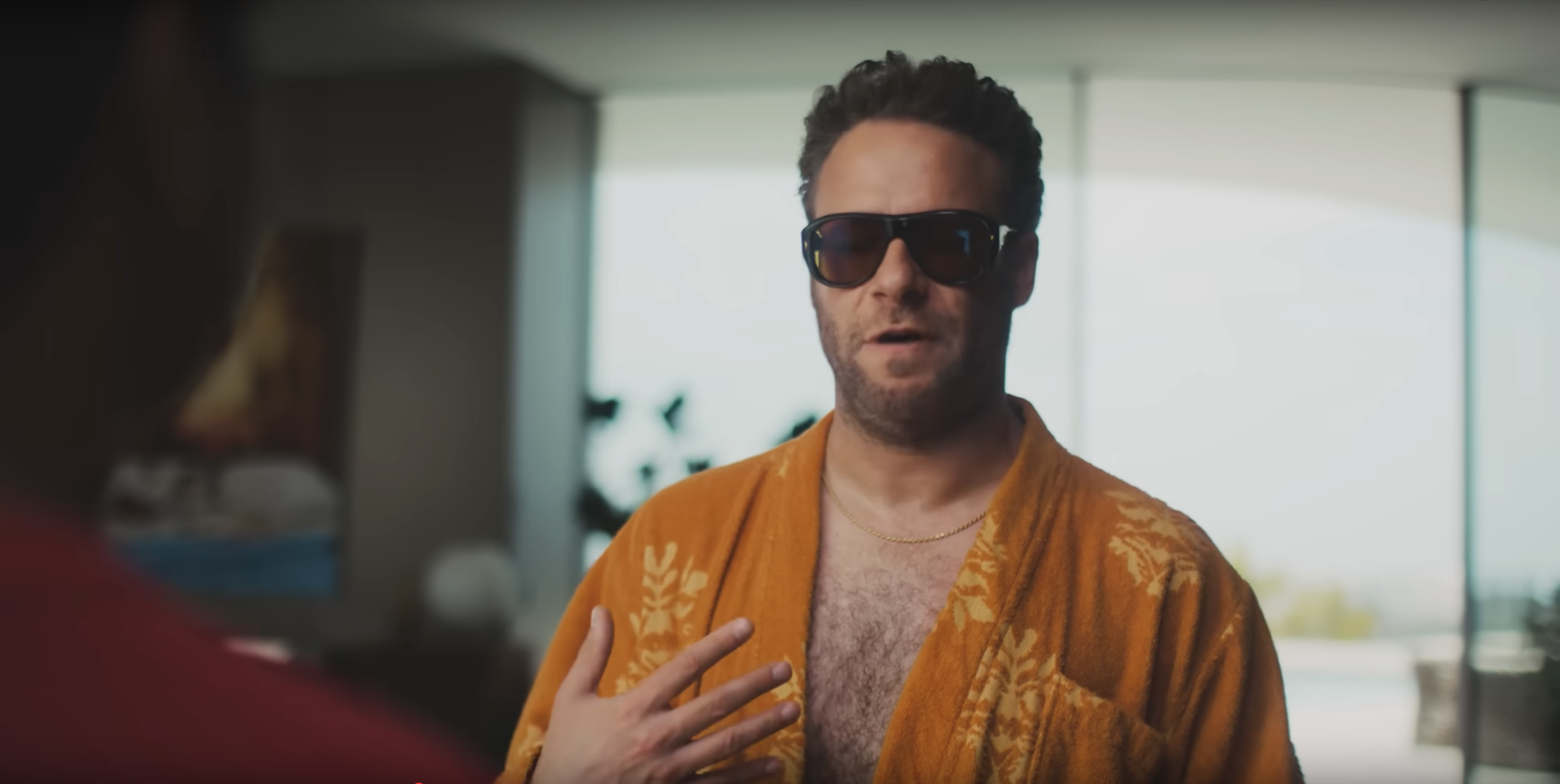
Seth Rogan plays Jeff, the ultra-wealthy tech bro. He seems cool and down to earth, which Seth Rogan pulls off easily, but Jeff’s total lack of understanding of ordinary life shows his tin ear especially when giving Arj advice. Once he’s dropped into Arj’s life, he learns really quick what working hard gets you and what survival actually looks like. That is where his growth comes from, and it’s a character arc that works well and Rogan does a solid job with Jeff as a person.

The Flaws and Fixes

As much as I enjoyed this film, and I really did enjoy it, Good Fortune is not a perfect movie. There are a few logic gaps and strange character decisions, some scenes over stay their welcome, and a few of the joke fall flat. The thing is, people do strange things in emotional chaos, and the best storytelling always lives in those honest but imperfect decisions that create relatable conflict.

My biggest wish list item for Good Fortune is that it had a better soundtrack with a little more personality. While this isn’t always true, music adds an extra layer to the storytelling, especially in a comedy, that can heighten a moment or release tension or sharpen the focus of a scene. Sadly, I don’t even remember the soundtrack at all. It’s not a deal-breaker in a film like this, but it just would have been nice to have one or two songs that felt like they built a moment in the film.

Is it Ticket Worthy?

So, is Good Fortune ticket worthy? Well, it’s an easy yes for me because I am actually going to go see it again with friends. I was fortunate enough to see a screener of it, and I laughed out loud in a theater full of strangers who were all laughing with me. That shared moment of joy is something that I feel like we have been missing lately. We need more joy, and real comedy in theaters has been rare for too long. Good Fortune is a good time with friend, family, kids, grandparents, and even completely strangers.

However, if you are someone who really doesn’t like seeing story structures reused or somewhat goofy comedies are not your favorite thing, this movie might not be for you. Still, I really thought it was a great time and I am glad I went.

Final Thoughts

So that is it for me. What did you think of Good Fortune. Are you planning to see it. Have you already seen it. What do you think about comedies? Are you willing to pay to watch them in the theater or would you rather just wait and see them on streaming? Thank you so much for being here with me on this one. I had a lot of fun with this movie and even more fun talking about it with you. Go see this movie with a friend and give yourself permission to laugh. You deserve that moment of happiness.

If you enjoyed this review, please give it a like and subscribe for more. You can also visit my YouTube channel at @ErinUnderwood for more videos.

***

If you’d like to watch GOOD FORTUNE, you can use my Amazon Associate links:

Posted in Movie Reviews, Movies, Uncategorized, YouTube | Tagged , , , , , , , , | Leave a comment

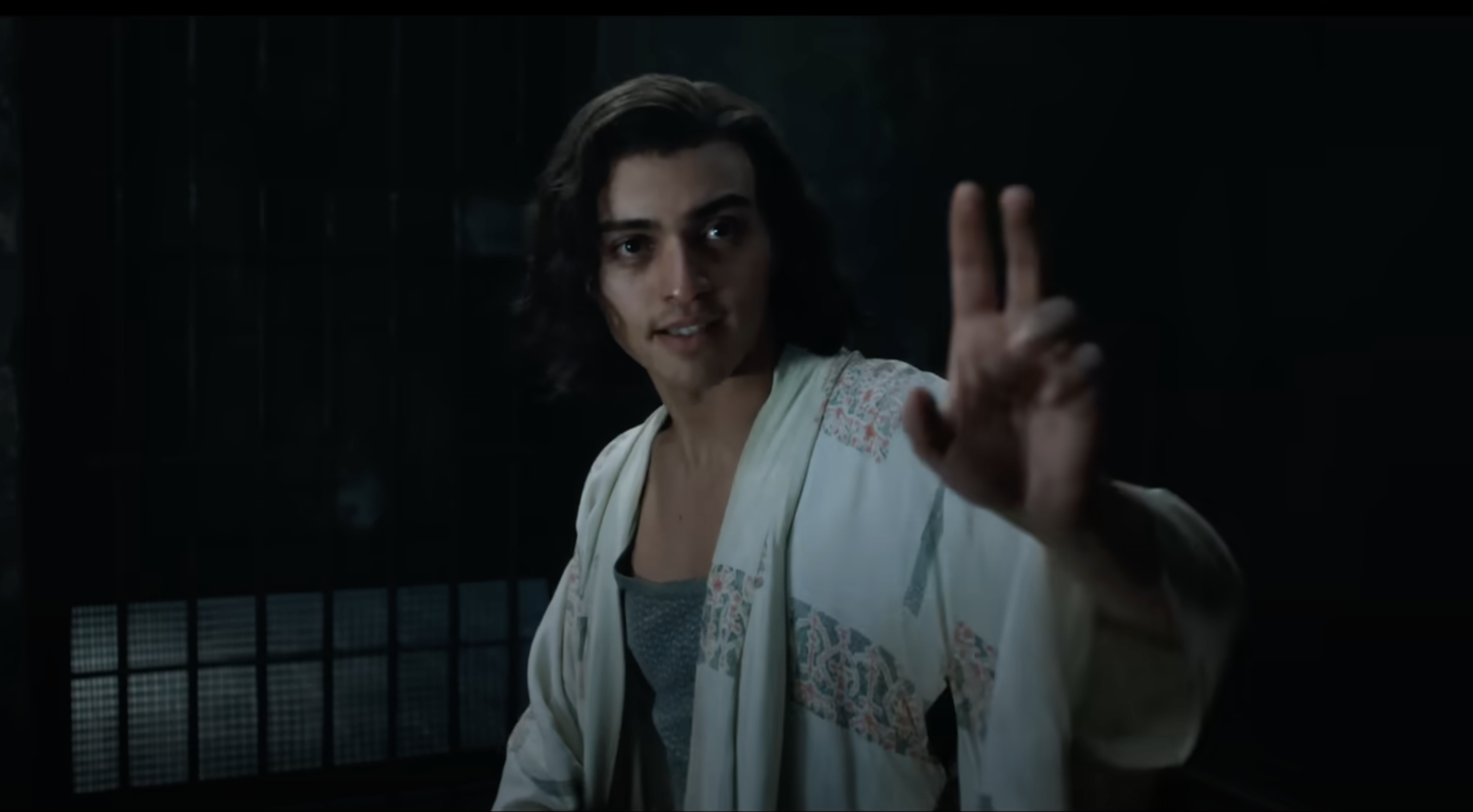
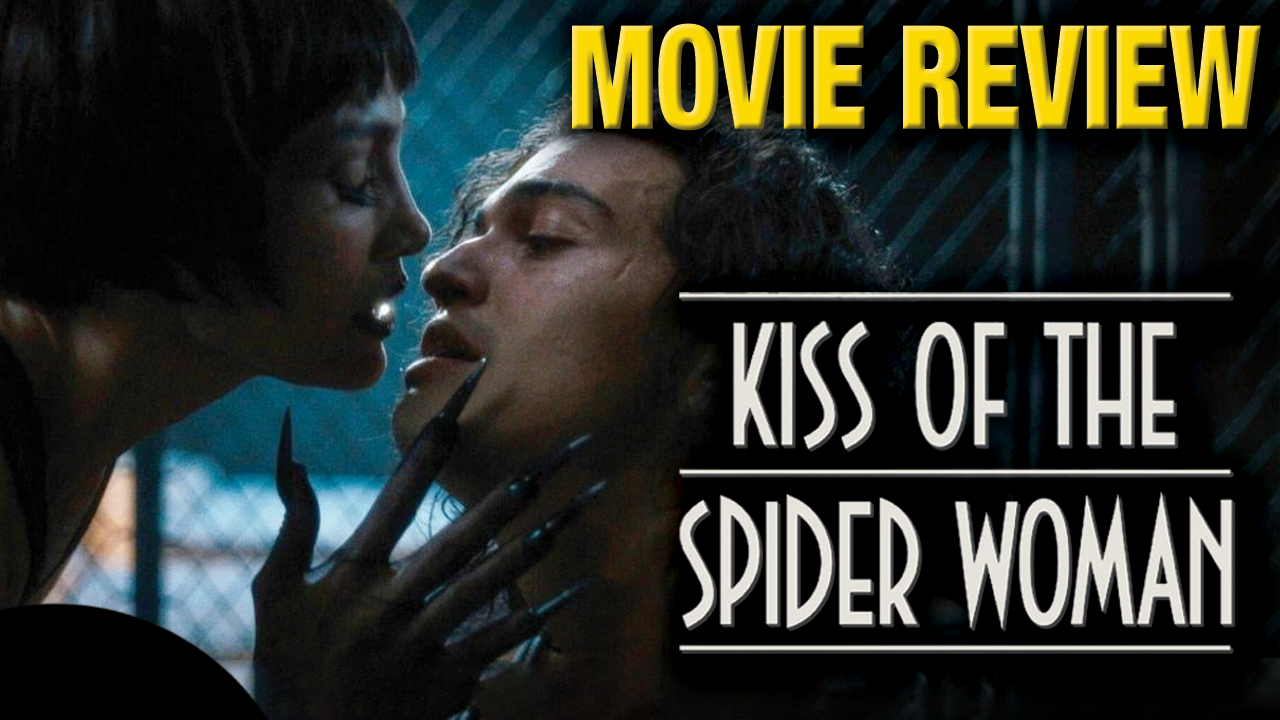
Kiss of the Spider Woman (2025), Movie Review | A Gritty, Revolutionary, Love Story

Kiss of the Spider Woman is a sexy and flirty film with a daring love story set in Argentina’s darkest years, blending politics, fantasy, and music into a tale of survival and connection.

Starring Diego Luna, Tonatiuh, and Jennifer Lopez, this remake of the 1985 film, originally based on Manuel Puig’s 1976 novel Kiss of the Spider Woman, has some big shoes to fill. The original was nominated for Best Picture, Best Director, Best Adapted Screenplay, and won Best Actor. So, if you’re going to remake a film with that legacy, you need to deliver something that can stand beside the original while also feeling fresh and new for a contemporary audience.

So, how does it measure up? Let’s break down this new musical to see where it hits, misses, and breaks new ground.

You can read the review below or watch the video review on YouTube:

Kiss of the Spider Woman is set in Argentina in the 1983, during the years of dictatorship when dissent was silenced. People were picked up off the street by the military, jailed, tortured, and disappeared. Over 30,000 people were targeted, either being imprisoned or disappeared entirely. Artists, musicians, writers, and whole communities were erased, many never seen again. This film takes that moment in history and tells it through two fictional men trapped in a cell and forced into each other’s lives, which ultimately transforms them both through their need to survive.

The story centers on Valentin, a freedom fighter with critical resistance information the authorities cannot extract. Torture hasn’t broken him, and silence has kept him alive. Frustrated with the lack of progress, the government tries another tactic. They place him with Molina, a charming and eccentric gay man imprisoned for years simply for being gay. Molina’s mother is sick, and the authorities promise him release if he can coax information out of Valentin. Desperate for freedom, he agrees, and that is where the story begins.

First Impressions
The story on the surface is very simple and exemplified in Molina’s approach. He shares who he is, talking honestly about himself, and slowly he begins telling Valentin stories. He believes everyone has one defining film, and for him it is Kiss of the Spider Woman. During their time together, he shares the film’s story piece by piece, bringing to life the tale of Aurora, a glamorous magazine editor who has had trouble committing to a man for certain reasons, but then finally finds love, only to realize that the price of that love is extraordinarily high. In many ways, Molina becomes a modern Scheherazade, spinning stories for Valentin night after night to connect with his cellmate. These stories turn into a form of friendship and comfort designed to keep them both alive inside a world that was designed to destroy them.

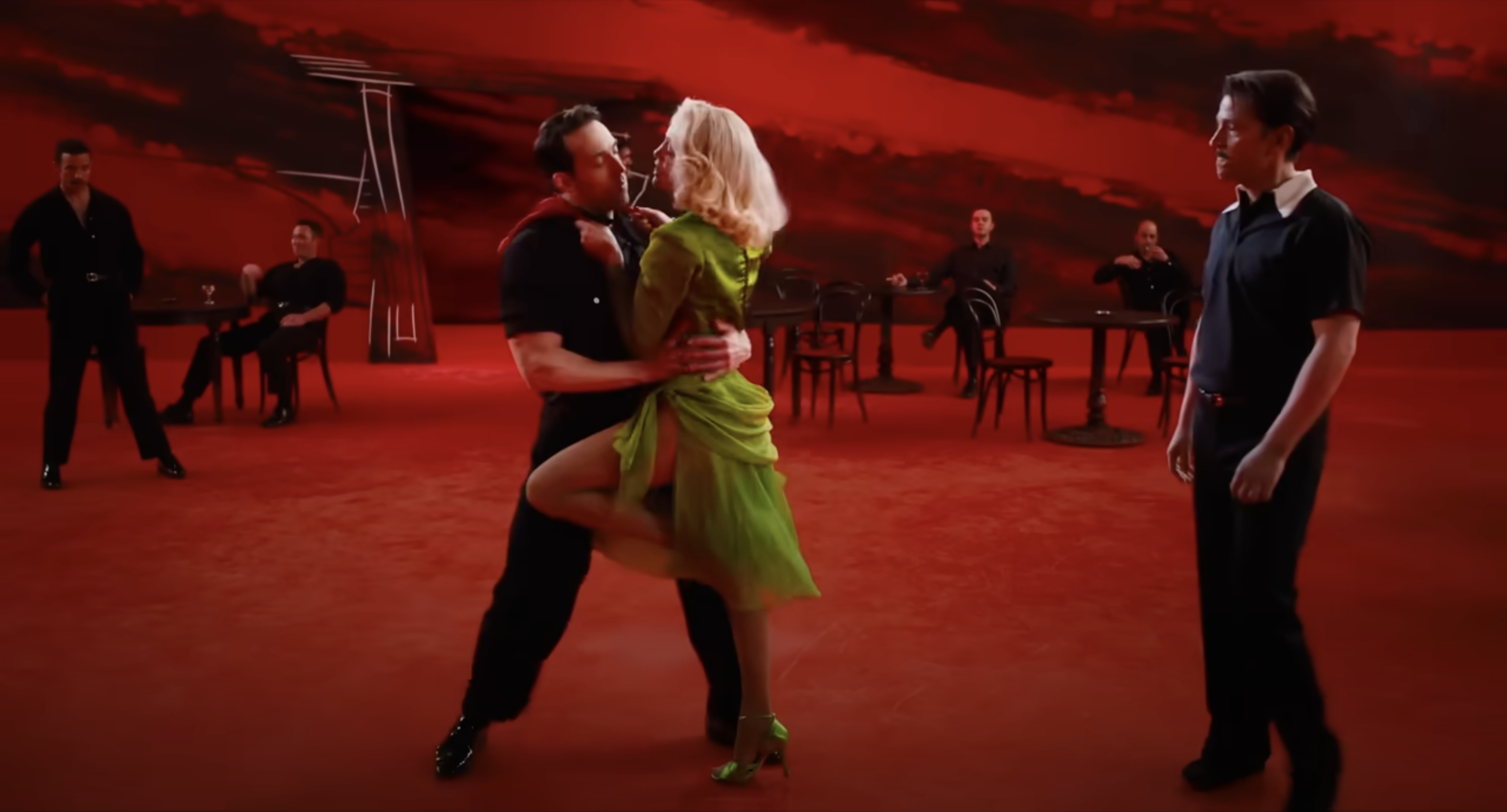
The result is two films that are interwoven and resonate thematically about love and the cost of love whether in the real world or in the world of the Spider Woman. Molina and Valentin’s story is told in dark and dirty shadows with gray tones that capture the grimness of prison life. Set against that backdrop of reality is the second fantastical film bursting with vivid, oversaturated color, full of melodrama, romance, and tragedy. These dreamlike sequences of Molina’s story stand in sharp contrast to the oppressive prison, shifting us constantly between harsh reality and shimmering fantasy.

Over time, the lines between the two stories blur. Molina’s retelling begins to echo Valentin’s own reality. The brutality of imprisonment collides with the tenderness of human connection and the lure of a soft safe place to hide. What starts as cool annoyance and suspicion slowly grows into friendship, and eventually into love that is born from the desperation of their shared experience inside the cell.

Theatrical Inspirations in the Film
What stood out most to me is how tightly this story is written and structured. Even though much of it takes place in a single prison cell, it never feels small. It feels expansive because of the way the two films overlap and how they use every square inch of the space they are given to tell the story. The contrast between the prison drama and the fantasy of the musical creates a cinematic relief that juxtaposes shadow and light, grays and saturated colors, oppression and freedom, and pain and singing in ways that are visually engaging.

At times, it felt like watching a stage play because of how they use the space within the cell. We get the claustrophobic feel of their life in this place, and that forces us to pay attention to everything they do and say, from their dialogue to their silences, from their acts of kindness to their moments of frustration. Then the film shifts, splashing into these expansive flamboyant musical scenes that shock us out of that grim nightmare. In this way, Kiss of the Spider Woman actually manages to be simultaneously theatrical and cinematic, and that balance is what makes the film work.

The Musical Within the Film
Yes, this is a musical, so let’s talk about the songs and choreography because the visuals are terrific. Roughly a third of the film, maybe more, is told through singing and dancing in Molina’s retelling of Kiss of the Spider Woman. If you’re not keen on musicals, this might not be your film. Still, the musical side is what breathes life into the story. It’s where the vibrancy comes from, keeping the darker prison scenes from feeling too heavy or depressing.

While the music isn’t my favorite soundtrack, every song serves its purpose. There aren’t any major showstoppers, but each number fits the moment and advances the story. Jennifer Lopez delivers a few strong performances, and her best might be the song that plays over the opening credits. Her voice sounds richer and more sensual here than in much of her solo work.

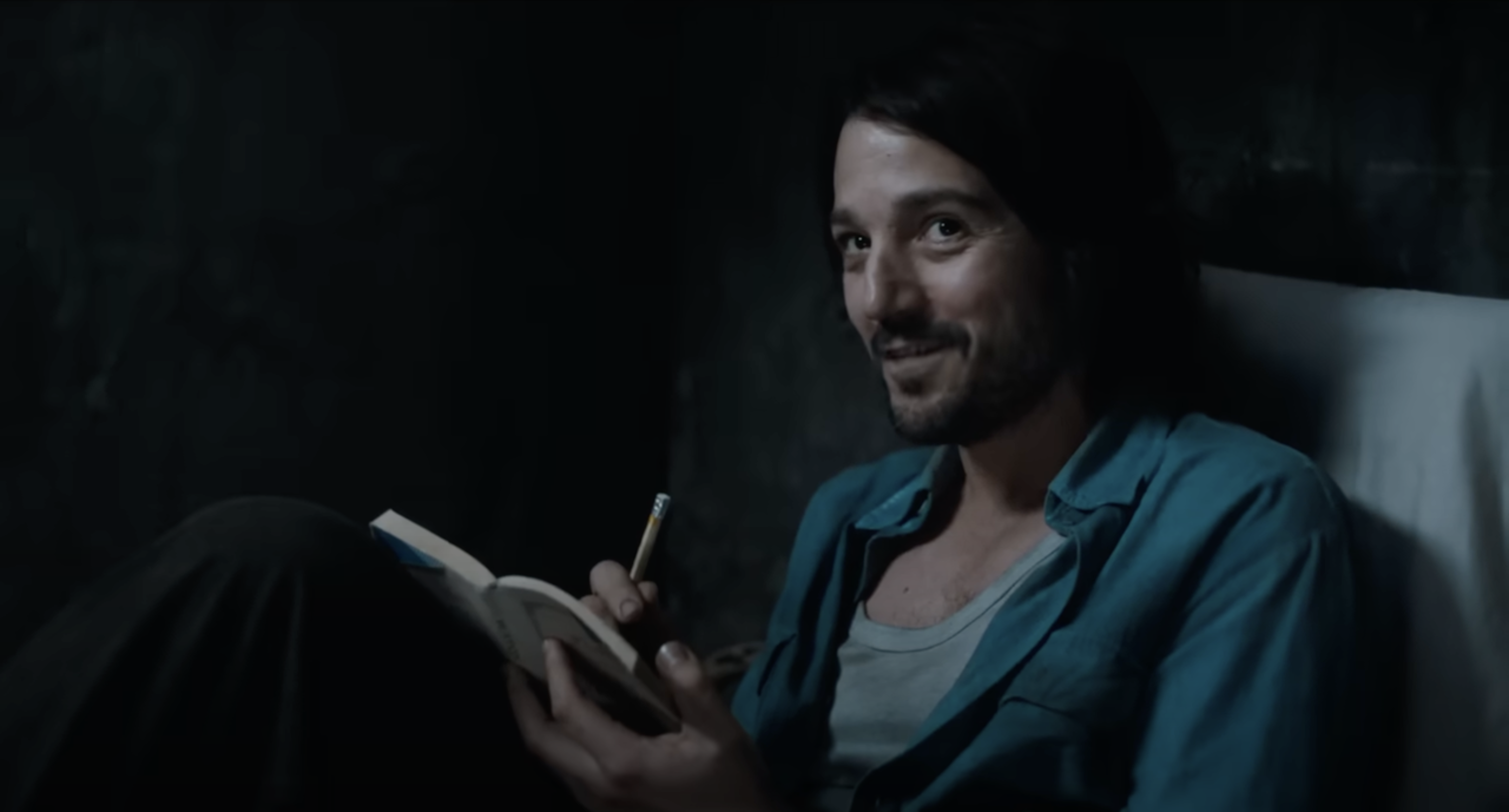
Diego Luna pulls off the grim, jaded revolutionary with restraint, giving us a man teetering on the edge of collapse. Yet when he steps into his dual role as Armando during the musical sequences, he loosens up with surprising warmth. He does a good job, though his talent is overshadowed by Tonatiuh, who truly is the star of the show. Tonatiuh is wildly entertaining and deeply expressive, embracing the nuances of his role as a gay man caught in an impossible situation.

Even so, it’s Luna’s steadiness as the Argentinian freedom fighter that keeps the film believable and prevents it from becoming just another flashy musical. His performance anchors the story while Tonatiuh and Lopez bring it to life through movement and song.

Cast and Character Development
Because Kiss of the Spider Woman is essentially two intertwined films, each character plays a dual role to embody the light and dark sides of the story. Diego Luna plays Valentín Arregui, the imprisoned freedom fighter, and Armando, the photographer who captures Aurora’s heart within the musical side of the story. Tonatiuh plays both Luis Molina, the prisoner who is sent into spy on Valentin, and Kendall Nesbit, Aurora’s trusted assistant. Finally, there is Jennifer Lopez, who appears only in the musical side of the film as both Aurora and the Spider Woman. While she isn’t the most flexible actress, she does look glamorous in this role, and she’s fun to watch on screen.

Themes and Theatrical Style
At its heart, Kiss of the Spider Woman is a love story. It’s also a political story about resistance and oppression during the darkest days of Argentina’s history. It’s about human kindness, about trust and betrayal, and about how shared suffering can create bonds that transcend political and social differences.

The relationship between Molina and Valentin evolves slowly, step by step. At first, they have nothing in common. One is a freedom fighter, hardened and defiant. The other is a dreamer, a man who clings to movies and fantasy. Yet as the days pass, they find themselves turning toward each other. The brutality of prison life, paired with inhumane treatment, creates a shared experience that only two men living under the constant threat of death could understand. From that shared pain grows friendship, compassion, and eventually love.

The musical sequences highlight this duality from the harsh reality embodied by Valentin’s situation to the escapist fantasy embraced by Molina. Within that fantasy darkness and fear are transformed into light and beauty, making life bearable, if only for a moment.

Kiss of the Spider Woman is also a film about how love redefines us, even as it means letting go of the parts of ourselves that we once needed to survive. For Molina, it’s realizing that true affection isn’t about shrinking himself to fit someone else’s life, but finding someone with whom he can be fully himself. For Valentin, it’s the realization that love takes many forms, and that even fleeting moments of tenderness can restore a man’s humanity in his darkest hours.

Recommendation
So, is Kiss of the Spider Woman ticket-worthy? I think you’ll know before walking into the theater if you’re going to like this film. If you enjoy LGBT friendly films, musicals, romances, or slow burn political thrillers, I think you’ll find something here to like. The story is strong, and the script is well written, but it’s really the connection between Diego Luna and Tonatiuh that sells it.

It drives home the idea that sometimes the most revolutionary act is simply caring for another person under impossible circumstances.

If these things aren’t generally the type of films that you enjoy watching, I don’t think this film is going to change your mind. However, if you do like these kinds of movies, I think you’ll enjoy it. So, Kiss of the Spider Woman, what do you think? Is this a film that you’re planning to check out? Did you see the original back in the day or read the book? Let me know in the comments below.

If you enjoyed this review, please give it a like and subscribe for more. You can also visit my YouTube channel at @ErinUnderwood for more videos.

***

If you’d like to learn more about KISS OF THE SPIDER WOMAN, you can use my Amazon Associate links:

Posted in Movie Reviews, Movies, Uncategorized, YouTube | Tagged , , , , , , , , , , | Leave a comment

Tron: Ares – Disney’s Bold Reboot or a Broken Franchise?

What would you do if you had a franchise that was struggling, the last film stumbled hard, and the general audience had already moved on, but you still knew the core idea was strong and more relevant than ever? In Disney’s case, you’d make Tron: Ares.

I know this might break the internet, but I think that was the right call. As wild as that sounds, I’m going to tell you exactly why. We are not going to agree on every story choice here, but if you stick with me, we’re going to get into the tech side of this film, and that’s where it genuinely surprised me.

Tron: Ares is directed by Joaquim Rønning and stars Jared Leto, Greta Lee, and Jeff Bridges. There may be a few light spoilers, but I’ll keep things fresh and focus on what works, what falls short, and why Tron: Ares might actually be one of the most authentic science fiction films of 2025.

You can read the review below or watch the video review on YouTube:

The Tech Race
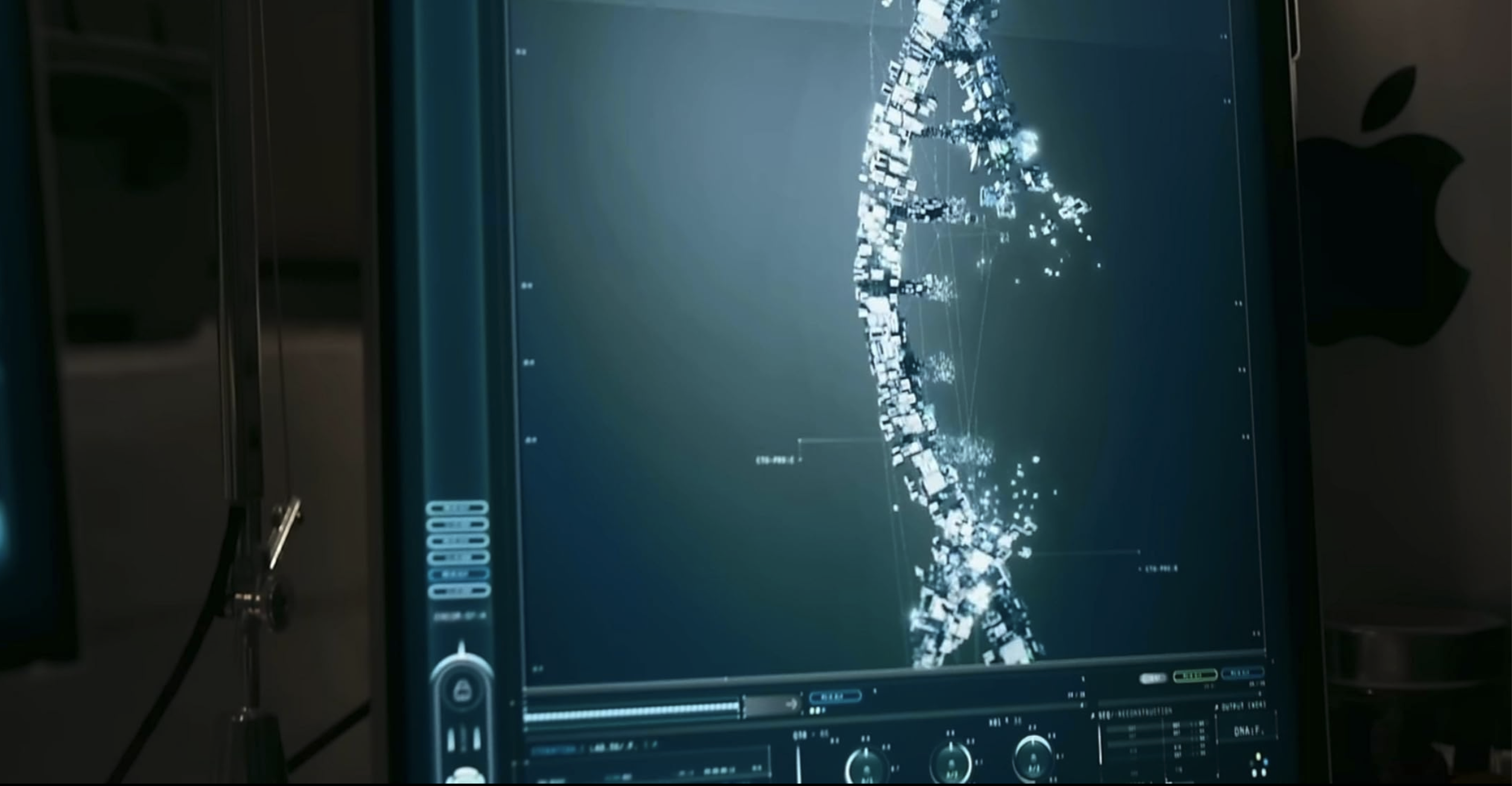
The story centers around two major tech companies—ENCOM and Dillinger Systems—competing to do something that’s never been done before: permanently bring digital objects from the Grid into the real world. The problem is that anything printed from the Grid only lasts twenty-nine minutes before it disintegrates. Both companies are chasing what they call the “Permanence Code,” a piece of programming that could make digital creations truly permanent in the physical world.

That’s the spark that drives the story forward. Dillinger’s team is ahead, but when Eve Kim, a brilliant programmer at ENCOM, makes a breakthrough, Dillinger deploys his most advanced AI security agent, Ares, to retrieve her research. From there, the film becomes a conflict between humanity, artificial intelligence, and the users who think they control the programs they’ve created.

It’s a big, concept-driven story that mirrors the real-world race among AI companies today. You can draw a direct line between ENCOM and Dillinger and the rivalry among OpenAI, Anthropic, and Google. In that sense, Tron: Ares feels like it’s answering the call from humanoid robotics innovator Brett Adcock, CEO of Figure, who recently said, “We’re running out of science fiction movies from which to build startups.” The film leans into that energy, making the stakes feel futuristic while also uncomfortably familiar.

Disney’s Bold Pivot
One of the biggest complaints I’ve heard is that Tron: Ares doesn’t pick up the threads from Tron: Legacy. I get why that frustrates some fans, but I don’t think it’s a problem. It’s actually a smart business move.

If Disney had forced this film to carry the narrative baggage of Tron: Legacy into Tron: Ares, it would have collapsed under its own weight. That earlier film looked great, but it struggled to connect on a story level. Ares avoids that trap by telling a new story that feels culturally relevant and technologically aligned with where we are in 2025. That’s a bold choice for Disney. Making a film that stands alone inside a long-running franchise is risky, but it gives Tron a real chance to rebuild its audience.

This deviation is, in my opinion, one of the film’s greatest strengths. Tron: Ares is accessible to both longtime viewers and people walking in cold who don’t want homework before a night at the theater. You don’t have to catch up on multiple entries in the franchise to understand what’s going on, and that makes this film feel clean, confident, and complete in a way that many modern franchise films fail to achieve

It also shows confidence in the creative team. Rather than recycling old ideas, Ares commits to a direction that reflects today’s conversations around AI, tech giants, and the merging of digital and physical existence.

Visual Spectacle on the Grid
Visually, Tron: Ares is astonishing. I saw it in IMAX 3D, and it was breathtaking. The lighting, motion design, and digital architecture are next-level. Every frame has been crafted with care, from the smallest reflections on glass panels to the vast landscapes of the Grid. This is what cinematic spectacle should look like when it’s designed to support the story.

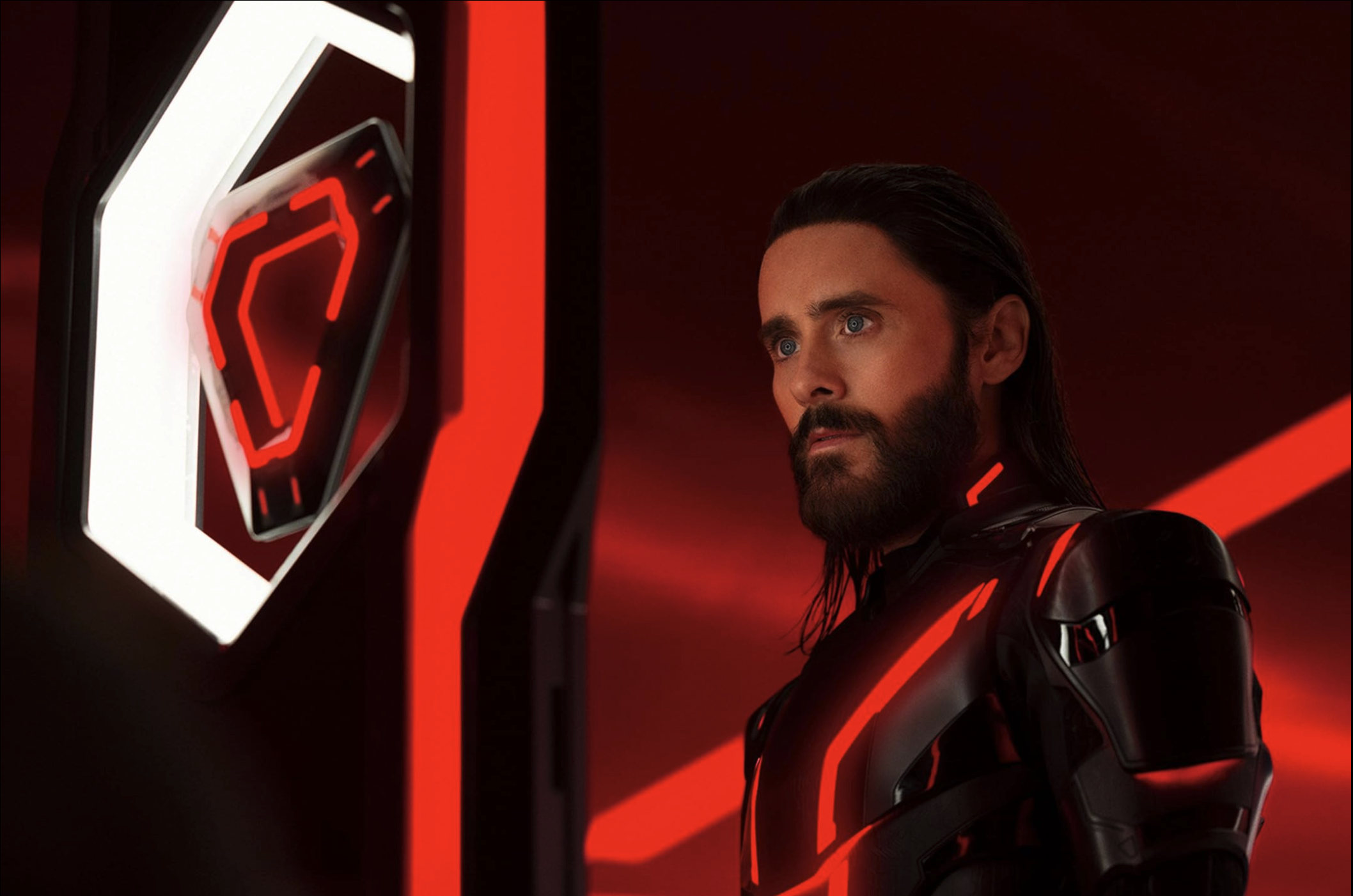
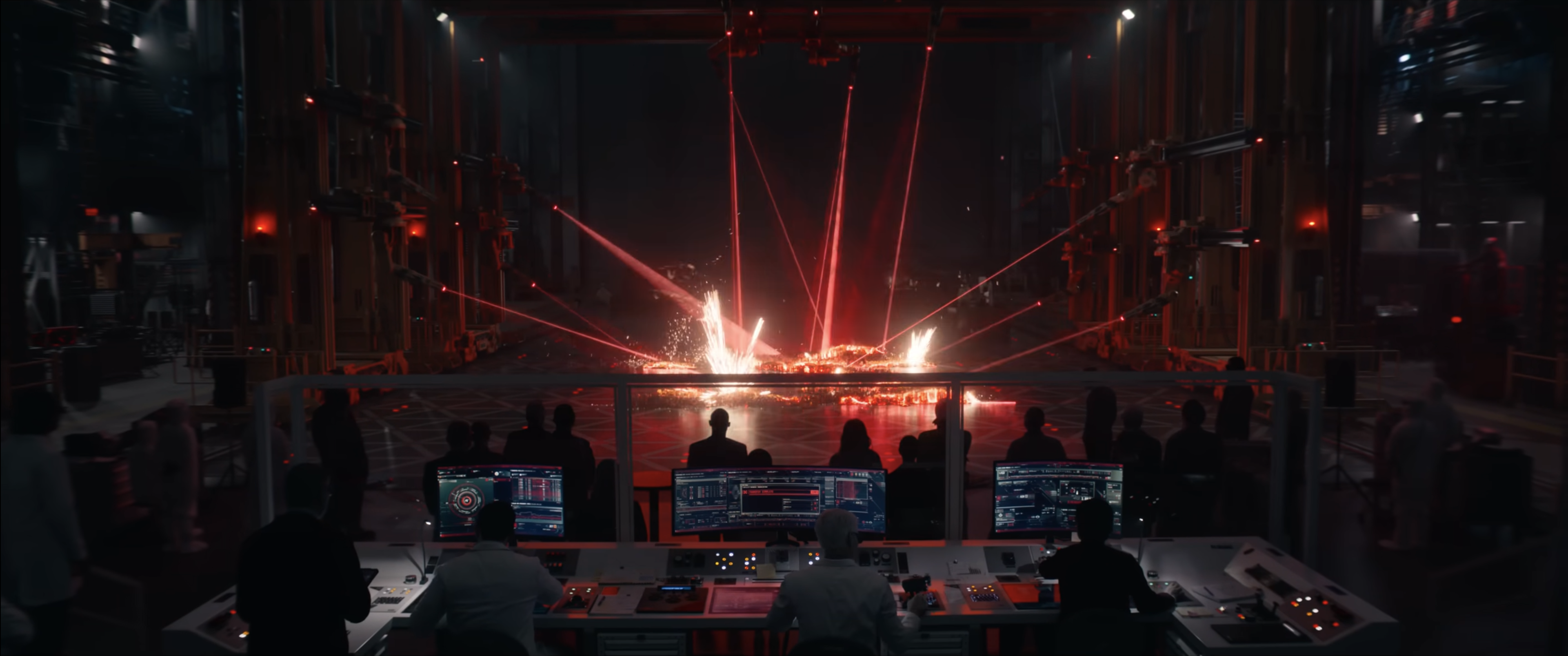
Dillinger’s digital world pulses in deep reds, which is clearly a nod to the Greek god of war and a reflection of its aggressive, power-hungry culture. ENCOM’s Grid, by contrast, glows in cool whites and blues, a calmer, more human-centric environment. The color distinction isn’t just pretty; it helps you intuitively understand which world you’re in and what each company represents.

What impressed me most is how seamlessly the real and digital worlds blend. There are no visual hiccups where the CGI feels off or the lighting doesn’t match. The production team—using a combination of traditional VFX, CGI, and AI-assisted visualization—has created a unified environment that feels alive. This team did their jobs at a master-class level.

It’s rare these days to get a film that genuinely feels “big-screen worthy,” but this one does. For eighteen bucks, it’s absolutely worth the ticket price just for the immersive experience. We don’t get many “wow factor” movies anymore. Tron: Ares exemplifies visual cinematic wonder on the big screen.

Characters and Growth
Jared Leto plays Ares, the central AI program brought into the physical world. What makes him interesting is that he’s not designed to be human. He’s a security AI trained inside an augmented adversarial system, where every loss forces him to adapt, making him increasingly logical, agile, and efficient. He reminded me a bit of Agent Smith in The Matrix, except this time, we’re watching the early stages of evolution rather than the decay of an old program.

Through his interactions with Eve Kim, played by Greta Lee, we see Ares learn empathy and begin to understand human emotion. There’s a subtle moment when he pauses while reading one of Eve’s essays about the possibility of benevolent AI. That single pause becomes the seed of his transformation. Later, when Eve reaches out to comfort him as his physical form dissolves, we witness a genuine emotional shift in Ares, and that spark of connection is something that Julian Dillinger hadn’t predicted.

Greta Lee is fantastic as Eve Kim. She’s intelligent, believable, and emotionally grounded. Instead of trying to outfight the AI, she out-thinks it. Her performance gives the story a human anchor amid all the digital chaos, and her dynamic with Ares becomes a rare example of a human–AI collaboration done right on screen.

Evan Peters plays Julian Dillinger, the arrogant CEO of Dillinger Systems. He’s perfectly insufferable, smug, manipulative, and reckless. You’re supposed to hate him, and you do. His downfall feels satisfying, even if he leaves so much wreckage in his wake.

Jodie Turner-Smith as Athena provides an effective counterbalance to Ares. She’s another AI program, but unlike Ares, she doesn’t have the chance to grow beyond her coding. The contrast between the two defines the moral spine of the story.

And then there’s Jeff Bridges returning as Kevin Flynn. It’s always nice to see him, but his cameo is brief and emotionally flat. It works as a nod to the original, but it’s not a pivotal moment in this story.

AI and Digital Design
This is where Tron: Ares shines and stumbles a little. The film does something rare in that it actually gets AI right. These “programs” are, in modern terms, AI agents. Each one has a specific purpose, a skill set, and the ability to collaborate with other agents, programs, and systems. What we see is the orchestration of multiple agents working toward shared goals, both in the Grid and the real world.

Ares was trained using an adversarial learning model, which means he learns by failing and then reconstituting himself in the Grid, each time with improved logic. Every loss makes him smarter. That mirrors how some real-world AI systems are trained today, especially those using reinforcement through adversarial simulation. On top of that, he pulls data from external sources—effectively scraping human information much like modern AI models do—and he learns through both virtual training environments and physical-world interaction. All of that gives the film’s science-fiction foundation a surprising amount of technical authenticity.

There’s also a layer of philosophical subtext running through the film. Eve’s belief that AI can evolve toward benevolence mirrors real debates in the AI community about safety, control, and moral guardrails. Her faith in the possibility of benevolent AI is what ultimately influences Ares’s development down that path.

The film also touches on the idea of embodied AI, which is essentially digital minds operating in physical forms. Usually this applies to robotics, but in Tron: Ares it applies to printed bodies in powered suits. That concept is more realistic than it seems in the film. We’re already seeing early versions of it in robotics and spatial computing. So while Tron: Ares still leans into the fantastical, it’s grounded enough to make you wonder how far off this future really is.

Where the Science Breaks
Now, here’s where the film stumbles. The entire story revolves around the idea that you can “print” digital objects from the Grid into the physical world, but they only last for twenty-nine minutes before disintegrating, but the elusive “Permanence Code” could fix this issue.

The problem is that the movie never explains why this limitation exists. We already know that 3D printing in the real world works, and that it relies on physical materials to make physical objects. You can 3D print metal, plastic, and even large-scale structures like houses, and in the biomedical field, researchers are already bioprinting bone scaffolds, skin-like tissue, and early forms of flesh using living cell matrices. The film never clarifies whether the printing beam is converting energy to matter or drawing from unseen material reserves. So why can’t they simply print these objects using real physical matter instead of trying to print “something from nothing”?

If the issue is that the programs themselves need permanence rather than the physical shells, that could have been addressed with a single line of dialogue. The film never goes there. It also doesn’t address how the programs are housed in their printed bodies with no mention of neural lattices, wetware, or any framework that would make their existence plausible. There’s also no mechanism identified for transferring the AI consciousness back to the Grid with all of its newly acquired experiential data.

For a movie that gets so much right about AI, this oversight stands out. It’s the one major flaw that undermines the story’s logic. When your entire narrative revolves around a piece of technology, that technology needs to make sense. If you look too closely at the central problem and need for the permanence code, it doesn’t make sense because they never clarify some of the details that would explain the situation.

That said, the visual design of the printing process is gorgeous — from the laser ignition to the ground-up materialization, all the way to that moment when the cocoon exterior shakes off to reveal the finished form beneath. It’s pure cinematic magic, even if the science is shaky.

Is It Ticket-Worthy?
So, is Tron: Ares ticket-worthy? There is so much more that I could say about this film, but I think it is. This isn’t the best film of the year, but it’s a good one. It’s more coherent and emotionally satisfying than some recent franchise attempts. For example, Tron:Ares compared to Captain America: Brave New World has a much more logical premise and a more compelling problem to solve, Tron:Ares compared to Star Wars: The Rise of Skywalker actually shows Ares character arc, and Tron:Ares even beats James Gunn’s Superman when it comes to building a believable set of supporting characters who get just enough screen time without stealing the show. Then there are comparisons with Tron:Ares and Demon Slayer: Infinity Castle, The Long Walk, Caught Stealing, The Toxic Avenger, and Mission Impossible: The Final Reckoning.

The story is self-contained. It has a clear setup, believable motivations, strong visual identity, and emotional resolution. It respects the intelligence of its audience, especially tech-savvy viewers who already live part of their lives in digital spaces.

It’s also surprisingly accessible. You don’t need to know the Tron universe to follow the story. If this is your first Tron film, you’ll be fine. The movie provides enough context to understand its world without slowing down to over-explain.

Final Thoughts
Tron: Ares isn’t trying to be profound. It’s trying to be engaging and it succeeds. It’s a smart, visually mesmerizing film about the intersection of technology and humanity, about programs learning what it means to be alive, and about people realizing that intelligence—artificial or otherwise—can’t exist without empathy. So, yeah, Disney made the right call to take Tron: Ares in this direction, dropping the failed story threads from Tron: Legacy to give this franchise its best chance possible to overcome that failed legacy.

So, enough from me. What did you think of Tron: Ares? How much of this review do you agree with? Have I lost my mind? How do you think it measures up, and do you think the film worked as a reboot, of sorts, for the franchise?

If you enjoyed this review, please give it a like and subscribe for more. You can also visit my YouTube channel at @ErinUnderwood for more videos.

***

If you’d like to watch TRON, you can use my Amazon Associate links:

Posted in Movie Reviews, Movies | Tagged , , , , , , , , | Leave a comment

One Battle After Another, Movie Review | A Film that Subverts Political Expectations

One Battle After Another is a wild, sprawling, 2-hour-and-41-minute film that stars Leonardo DiCaprio and Sean Penn. So many critics are either celebrating or panning it because they are bringing their issues into the theater instead of just watching the film.

Here’s what you need to know: One Battle After Another pulls together a story about protest, domestic terrorism, family issues, politics, race, sex, and ideology into a complex, deeply textured film that is as flawed as it is fabulous … but probably not in the way you’re thinking. With so many themes at play, the critical question is whether or not writer and director Paul Thomas Anderson pulls it off or overshoots the goal. That’s exactly what we’ll dig into today, and fair warning that I am going to touch on a few spoilers, but nothing I say will spoil the film itself. So, let’s get into it.


You can read the review below or watch the video review on YouTube:

Bob and Perfidia are members of a domestic revolutionary group known as The French 75 back in the early 2000s. They are a freedom-fighting group promoting free borders, free bodies, and free choice. The film opens with the team breaking into a migrant detention center without a hitch, and Perfidia confronts the commanding officer, Steven J. Lockjaw, in a demeaning way that triggers his obsessive desire for her, which drives the plot of the film. The team pulls off violent, public jobs with no casualties, until Lockjaw tracks down Perfidia and gives her a private deal to walk free. However, things eventually go wrong, Perfidia is caught, and the team goes dark. In the aftermath, Bob is left alone with their newborn daughter, Willa, who he raises under a false name as they go on the run.

Sixteen years later, Colonel Lockjaw gets an invite to the Christmas Adventurers Club, a white supremacist society of powerful men who covertly rule over areas of American life. The only catch is that he has to willingly expose himself to a vetting process that will dig up any and every exposure he may have had with Black people. Since he is obsessed with Perfidia, he thinks her daughter could be his, and that turns Willa into a loose end that needs to be addressed. This sparks a chain reaction of events that equate to invading a small American town to find Bob and Willa. And that’s really where the story should begin and it takes about an hour to get there.

First Impressions of the Film

So, One Battle After Another is dealing head-on with extreme themes that range from domestic terrorism to social revolution, political control, racism, immigration, and family drama. With material like that, one might expect the film to carry a heavy-handed radical left or radical right political message, pushing one side or the other. I’ve heard people call this film leftist or Trumpian, and their interpretation of the film is generally defined by their own political expectations fed by the imagery of the film. If you bring your political baggage to the movie, you’re very likely to see the film you’re primed to see from the point of view you bring into the theater. However, that is not how the film was made to be seen, and we can tell this from how the director subverts so many of his own plots and themes.

One Battle After Another is more of a centrist film that resists turning into a simple “us vs. them” narrative. Regardless of why each character acts the way they do — politically, socially, or personally — the heart of the story stays with Bob and his love for Willa. He is a crappy dad, except that he loves his baby girl and he will do anything to keep her safe. If there is a single golden message in this gawdawful mess of a film, it’s the overriding love that Bob has for his daughter.

Domestic Terrorism on Screen

One of the core strengths of One Battle After Another is how it handles domestic terrorism by not shying away from the despicable nature of violence. It draws on the history of 1970s radical groups and tactics, groups that were both liberal and conservative that committed violence in the name of their political cause such as abortion clinic bombings, the Weather Underground’s attacks on government buildings, and Ku Klux Klan firebombings. These examples feel like they were fed straight into the French 75’s playbook for these fictional “freedom fighters,” who are fighting against modern issues of border control and personal freedom.

It would be easy to think the film is lionizing leftist politics and promoting domestic terrorism, but it isn’t because it is borrowing from both the radical left’s and the radical right’s history of violence. It shows us how screwed up militant violence is, with nothing glamorous about it. They achieve nothing, and when one of them is caught, the wind turns instantly as names are named. Lionizing a political group generally doesn’t include portraying them as utter failures with zero positive outcomes, and yet if we don’t stop to really think about this, it’s likely we won’t see it.

The Pregnant Rifle Scene – Symbolism vs Shock Value

Then there’s the image of Perfidia nine months pregnant and firing an automatic rifle at a shooting range. Her belly swell sticks out beneath her shirt while she braces the rifle against the baby for support and pulls the trigger. At first glance, it looks like leftist propaganda of a black woman at war, packaged neatly for conservative’s social media feeds. The image is so absurd that it immediately inspires a visceral response in viewers ,but you have to stop and think. Paul Thomas Anderson is not a rookie. He knows how imagery carries messages in film, especially imagery with so many political trapping. Yet, he still chooses to do this scene, knowing it will undermine the very narrative Perfidia seems to be supporting.

So, what is Anderson really trying to say? He has her screaming while shooting, with the but of the gun pressed against the baby. I think it’s because she knows that baby is Colonel Lockjaw’s. She sold a part of herself to stay free. Her self-loathing, the absurdity of the image, and the damage she may be doing to the baby … none of this is not political. It’s emotional. It’s human, and it’s female. She hates herself and is carrying a baby from a man she despises, and she chooses not to abort. That scene holds as many conservative messages as liberal ones, but if you walk in with a fixed point of view, you’ll miss that nuance.

A Lens into Government Overreach

We also see government overreach at its most grotesque when Colonel Lockjaw mobilizes federal military resources under the cover of official channels to find Bob and sixteen-year-old Willa. The terror of seeing soldiers roll into an American town as they invade streets, sweeping through buildings, and search for migrants is presented in the most absurd light possible. Everything is over the top. Nothing is believable … except that ironically we are seeing similar actions in the real world today. While the military stages a “sanctuary city raid,” Lockjaw secretly redirects a group of men to find a teenager and her father without any further explanation to his team. Everyone who sees what’s happening knows it’s wrong, because it’s clear he’s not there for immigrants. The absurdity of the situation cuts through political ideology, and that’s why it works as a story device to turn this theme upside down. We all recognize one man’s unchecked power, and no one under his command can stop it.

The Christmas Adventurers Club, White Supremacy, and Black Obsession

The film also unpacks a hidden power structure through the bizarrely named Christmas Adventurers Club, which is a white, racially “pure” society that Lockjaw is desperate to join, despite his obsession with Perfidia. To be accepted, he must pass a “vulnerability test.” However, after all these year’s Lockjaw finally decided to deal with his one weakness, which is Willa, and he thinks he can outsmart the investigation by eliminating his “problem” by spending hundreds of thousands of tax payer dollars to solve that problem so that he can join the group. In an equally absurd set of circumstances, he gets what he wants: inclusion in the club in the most fitting way possible. It underlines the deprivation that drives Lockjaw to want a seat at the table as well as how easily a person in a powerful position can forget that he serves the organization, not the other way around.

Paul Thomas Anderson’s Real Focus

Despite the elbow pokes and political winks, One Battle After Another resists taking sides. This film doesn’t declare who’s right or wrong, even if it might seem like it does because of the focus on the French 75. Instead, it peels back the scabs to show the infected flesh beneath in order to examine the putrid rot within every theme. The only pure storyline is Bob’s love for Willa. That’s the one thing worth holding onto, and Paul Thomas Anderson knows it, which is why it’s the one that he uses to hold everything else together. If there’s any genius here, it’s in this directorial choice that tests us. Do we see what we want to see in this film? Or do we see what he presents in the way it is presented? … and what he presents is a picture of flawed ideals, ineffective choices, and people who are so busy putting their “everything” into a pursuit that never pays off that most of them lose everything. There is a very human lesson here, if we are willing to see it.

Cast and Character Development

While the characters in the film could have used a little more development to let us know who they are as people beyond just the roles that they play as part of the story, the actors all do a great job with what they are given.

  • Bob (Leonardo DiCaprio) pulls off the former radical who has drowned his grief in drugs and booze with conviction. He’s compelling in every scene, but honestly, I just wish he’d burn that robe he wears through the second half of the film.
  • Colonel Steven J. Lockjaw (Sean Penn) seems like someone you want to respect, but Penn leans into the role’s darkest edges, and you can’t help but hate Lockjaw for it.
  • Perfidia (Teyana Taylor) is almost comically sexualized in the film, but Taylor’s performance plays directly into her character’s contradictions.
  • Sensei Sergio St. Carlos (Benicio del Toro) is a highlight. He only appears in the second half of the film, but every scene he’s in is exciting. Del Toro makes you wish there were an entire movie built just around his character.
  • Willa (Chase Infiniti) flat-out steals the show. This is her first major motion picture, and with only a handful of minor credits behind her, she still manages to outshine a cast of A-listers. Every scene she’s in, she holds your attention.

Pacing & Structural Challenges

For all its strengths, One Battle After Another has one glaring flaw: it feels like two shorter films fused together. The first half, focused on Perfidia and Bob, is important in the larger context because it sets up and subverts the themes the film wants to explore. Meanwhile, the second half focuses on Willa and Bob and includes most of the exciting action.

But at 2 hours and 40 minutes, the overall runtime is too long, and the story could have been trimmed by 40 minutes, which would have made it stronger. Instead of building momentum, it lingers in scenes, forcing us to sit and stew on what we’re watching, when a tighter approach could have landed with more impact. A hard-hitting, run-and-gun style of storytelling would have let the themes breathe in our minds after the credits rolled.

Instead, the film locks us into its narrative for too long, cooking us in our own political stews rather than letting us experience what Paul Thomas Anderson was really trying to convey. That’s disappointing.

The Scene that Makes it All Worthwhile

However, there’s one scene that is truly masterful. It comes at the very end of the film, and I suspect it’s the moment that has critics standing up and taking notice. I won’t give too much away, but a series of events unfold where all the characters and storylines collide.

What follows is an incredible car chase with a breathtaking blend of cinematography, geography, and motion. The way it’s shot, the way it dips in and out of perspective, keeps you locked into the action. If you’ve seen the movie, you’ll know exactly what I mean.

The choices the characters make, and the way they converge in that final confrontation, are spectacular. It’s the most original car chase sequences I’ve seen in a long time, and it’s the kind of scene that makes you glad you saw it on the big screen. For me, it’s made the movie worthwhile.

Recommendation – Is One Battle After Another Ticket-Worthy

Is this film ticket-worthy? Maybe. There is a lot to commend, but you have to be willing to put in the time for this film … in so many ways. It should have been shorter. However, it does give you a lot to talk about with people. So, I guess that’s something, right? One Battle After Another is a lot more complex than the critics give it credit for, even though so many of them are raving about it. I think their focus is placed more on their own political ideology than the story itself, which is unfortunate because their views will impact how regular people end up interpreting it.

But, hey, that is enough from me. So, One Battle After Another, what do you think about it? Are you planning to watch it in the theater or wait for it on streaming? Have you heard any of the political machinations that people are chewing on about it online? What do you think of my take that this film actually subverts everything the critics told us that it’s about? Let me know.

If you enjoyed this review, please give it a like and subscribe for more. You can also visit my YouTube channel at @ErinUnderwood for more videos.

***

If you’d like to watch ONE BATTLE AFTER ANOTHER on Blue-ray, you can use my Amazon Associate links:

Posted in Movie Reviews, Uncategorized, YouTube | Tagged , , , | Leave a comment

John Candy: I Like Me, Movie Review | The Kindness Behind the Comedy

John Candy was an icon when I was growing up. There wasn’t a film he was in that I didn’t love. He’s also a man who had a lot of troubles and he was taken from us far too quickly.

So, when I had a chance to see the new documentary John Candy: I Like Me, at a special screening, I bought my $100 ticket and drove 3 hours to see it. Don’t worry, you don’t have to pay that kind of money to watch it. It’s coming out on Amazon Prime this month. So, did the documentary measure up to the man himself?

You can read the review below or watch the video review on YouTube:

It’s produced by Ryan Reynolds, directed by Colin Hanks, and it feels very much like a heartfelt tribute to one of the most beloved actors of his generation. What makes this film stand out isn’t just the big names you’ll see in it—though there are plenty, including Dan Aykroyd, Bill Murray, Steve Martin, Martin Short, Macaulay Culkin, and Catherine O’Hara. What really makes it shine is how personal it is. The memories come not only from John’s colleagues but also from his family, including his wife, his children, and the people who knew him best.

The film weaves those stories with clips from his most iconic roles and pieces of John Candy’s own commentary pulled from interviews and articles. The result is a portrait of someone who wasn’t just funny on screen but who carried his pain, his joy, and his sense of compassion into the characters he played.

Film Highlights

One of the first things the film drives home is how much John Candy’s early life shaped him. His father passed away when he was just 35 years old and John was still a little child. That loss left a lasting mark. The absence of his father created a sense of fragility in John as well as a deep awareness that time is short, and that you have to make the most of the moments you get. From his own words in interviews, you can tell he lived with that awareness. He seemed to know he wouldn’t have as much time as most people, and that urgency pushed him to embrace life fully.

That’s part of why he connected so deeply with people. He was someone who could recognize pain in others because he had lived with it himself. And when he played characters who were lonely, struggling, or quietly hurting, he wasn’t just acting. He was drawing from something real.

The film also does a strong job of showing that John Candy was universally loved. Bill Murray even remarks at one point that most biographies work because you can tell both the good and the bad about a person, but with John there really wasn’t anything bad to say. That could have made the film feel one-sided, but it doesn’t. Instead, the honesty of everyone’s reflections makes it feel grounded and true. You believe it when they say John was as good a man off screen as he was on.

The Heart of John Candy’s Acting

What really struck me was how much John put himself into every character. Almost every film he did has moments of honesty where he drops the smile, lets the guard down, and you see something deeper—something fragile and real.

Probably the best example is Planes, Trains and Automobiles with Steve Martin. The most iconic scene in that film isn’t the comedy or the slapstick; it’s the moment when Steve Martin’s character unloads his frustration in a long, brutal rant at John Candy’s character. The camera stays close on John’s face, and you watch as all that real pain he was holding down bubbles up. It feels less like acting and more like John responding as himself. That scene works because he was willing to let the truth of his own experience show through.

You see that same kind of honesty in so many of his roles whether it’s Uncle Buck opposite Macaulay Culkin, Stripes, or even small moments when he’s just talking about his weight. He had a way of finding something real in the dialogue, pulling from his past, and letting it come through the character. That’s the mark of a great actor: when they can take their own pain, their own humanity, and let the audience feel it.

And I’ll be honest—watching this film reminded me how rare that kind of acting is today. Modern films so often trade those emotionally rich moments for quick jokes, action beats, or slapstick. Seeing John Candy work reminded me of what acting can be when someone is brave enough to bare themselves on screen.

SCTV and the Media’s Obsession with Weight

Another major focus of the documentary is John’s time on SCTV, the Canadian sketch show that launched so many careers. It was there that he had the freedom to experiment, to stretch himself, and to evolve from the shy, introverted kid he was into the larger-than-life performer people remember.

But alongside those successes, the film doesn’t shy away from showing some of the tougher parts of John’s career. One of the saddest recurring themes is how often interviewers asked about his weight. Instead of focusing on his talent or the film he was promoting, the questions would circle back to his body. You can literally see the light go out in his eyes in those clips. It wasn’t just uncomfortable—it was demeaning.

Watching those interviews, I couldn’t help thinking about Ryan Reynolds producing this documentary, and even about Blake Lively, his wife, who’s faced her own intrusive questions in interviews. Whether it’s a baby bump or body size, those kinds of questions take away from the artistry and turn something personal into public fodder. For John, who was already carrying his own insecurities, that must have been exhausting. The film makes you feel that weight—no pun intended—and it adds another layer of appreciation for what he brought to his work despite how he was treated.

Recommendations

So, is John Candy: I Like Me worth it? For me, yes. Absolutely. Was it worth the ticket price and the trip for the live event? Again, yes. Not just because of the film itself, but because being in that room with people who loved John Candy and hearing Ryan Reynolds talk about him was something special.

That said, I also think the streaming release on Prime will be just as valuable for most people. The documentary itself is heartfelt, intimate, and full of insights into John’s life and work. If you love John Candy, if you’re interested in film and theater history, or if you just want to see what made him so beloved, this is a must-watch.

Younger audiences who may not know him well should definitely give it a try too. His films hold up. He was a common man in uncommon situations, doing the best he could, and in the process he became iconic.

Comment & Subscribe

So what about you? What are your favorite John Candy films? Was it Uncle Buck, Planes, Trains and Automobiles, Cool Runnings, or maybe his work on SCTV? Which characters stuck with you?

If you enjoyed this review, please give it a like and subscribe for more. You can also visit my YouTube channel at @ErinUnderwood for more videos.

***

If you’d like to watch JOHN CANDY: I LIKE ME on Amazon Prime, you can use my Amazon Associate link:

Posted in Movie Reviews, Movies, Uncategorized, YouTube | Tagged , , , , , , , , | Leave a comment